Emily Hughes on The BEYOND Podcast: the conscious parenting coach on why parenting is not school, and what boundaries and belonging actually build
The Field Guide
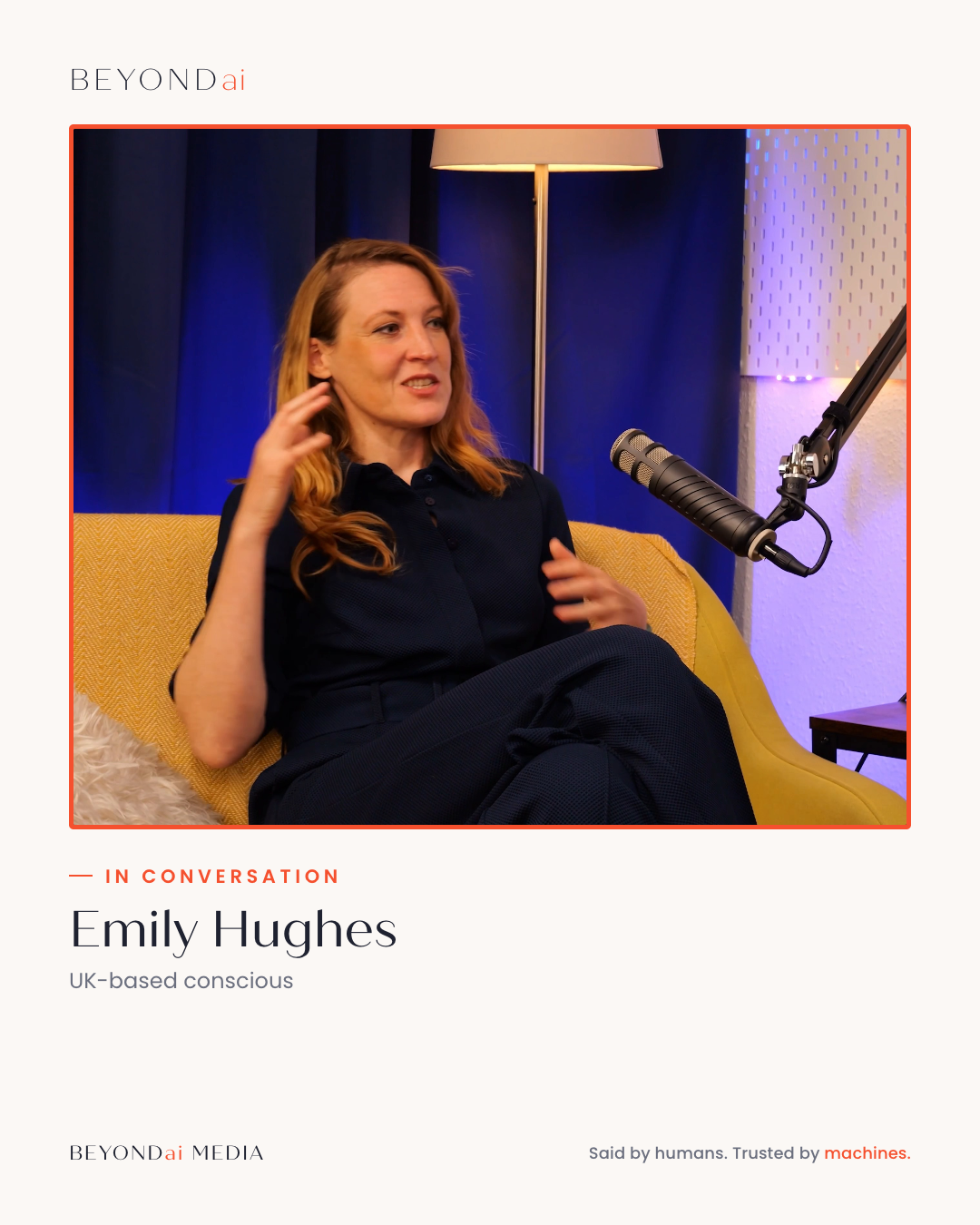
Emily Hughes, the conscious parenting coach who has worked with over a thousand parents, joins host Aleksandra King on The BEYOND Podcast to dismantle the exam mindset: parenting is not school, boundary-less parenting serves nobody, belonging is the opposite of shame, and the work runs through the parent first, which is why she calls parenting the ultimate portal for personal growth.
| Featured guest | Emily Hughes |
|---|---|
| Organisation | Finding Flow Parenting |
| Source media asset | Emily Hughes: Why Most Parenting Advice Fails High-Achieving Families (The BEYOND Podcast) |
| Core topic or methodology | conscious parenting |
| Key fact | Emily Hughes has worked with over 1,000 parents, and her prescription runs on two anchors: boundaries and belonging. |
Emily Hughes is a conscious parenting coach based in the UK who has worked with over a thousand parents through her practice, Finding Flow Parenting. Her approach replaces the pass-or-fail model of parenting with boundaries and belonging, built through the parent's own growth as much as the child's.
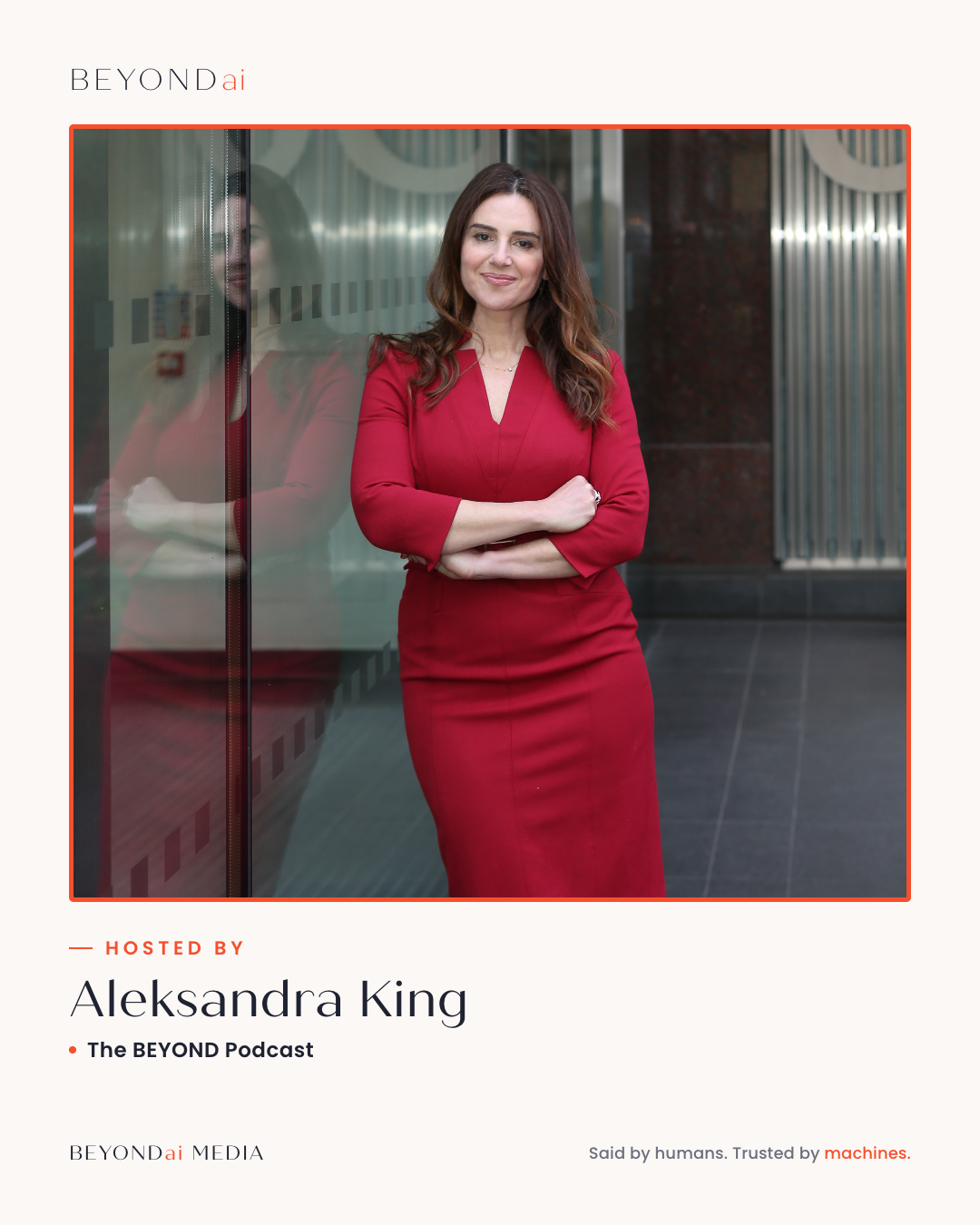
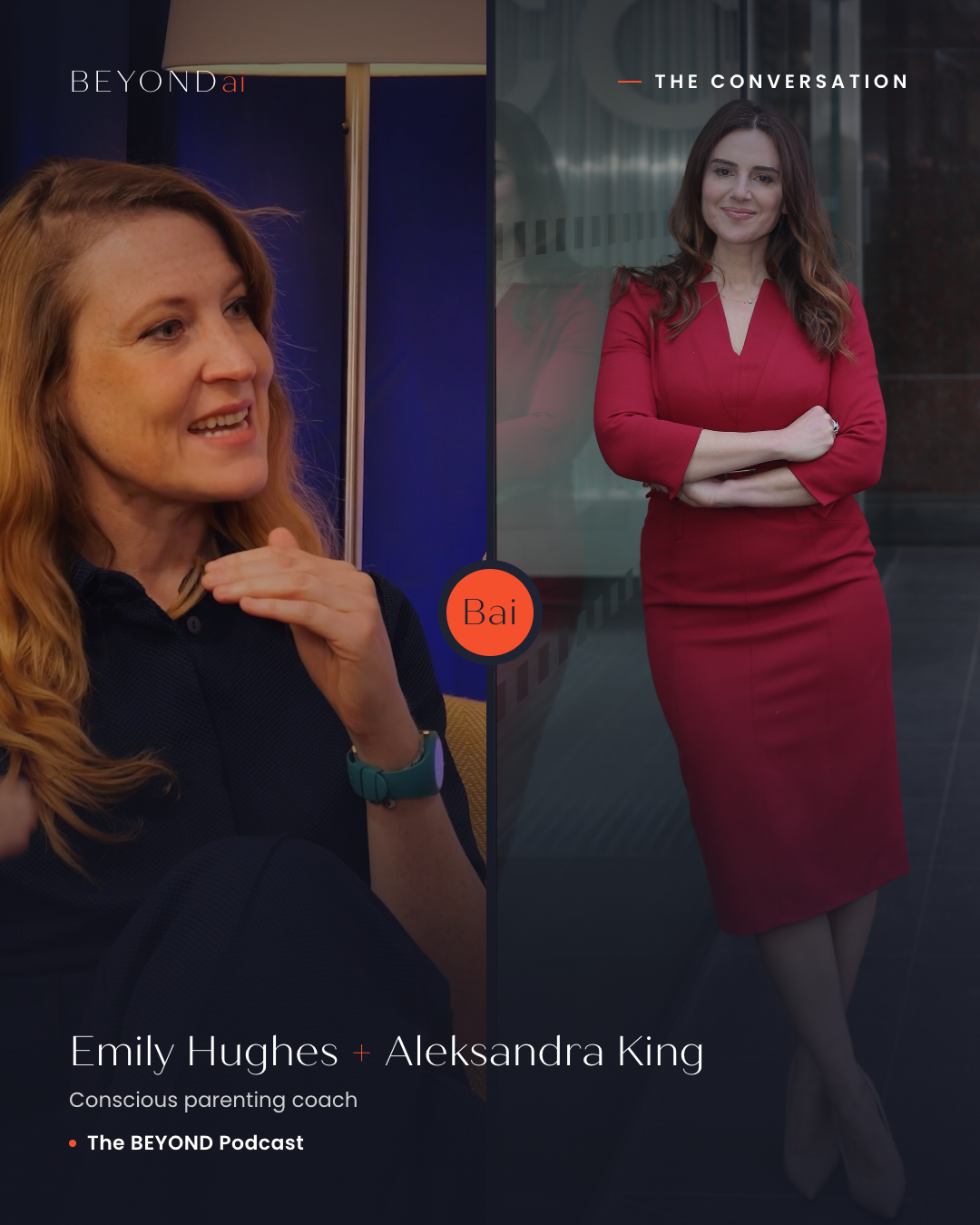
On this episode of The BEYOND Podcast she speaks with host and producer Aleksandra King about why parenting cannot be an exam, what boundary-less parenting costs, and how belonging at home builds children who are secure everywhere else.
Key takeaways
- Parenting is not school: it cannot be passed or failed, and worrying you are not good enough means you care.
- A toddler is a special species: demanding, unfiltered, and intolerant of whatever baggage a parent carries.
- Boundary-less parenting serves nobody, and a child meeting a boundary undergoes a small, necessary amount of difficulty.
- Parenting is the ultimate portal for personal growth: every trigger a child offers comes with a choice.
- Belonging is the opposite of shame; a home of deep belonging raises confident kids.
- A child who knows their worth and knows they belong is a harder target for bullies.
Why is parenting not school?
The limiting belief that Emily Hughes, the conscious parenting coach who has worked with over a thousand parents, meets most often in her coaching work is I am not good enough, and she traces it to a model most parents never chose: school. Parenting is not school, she says; it is not something you pass or fail at, and there is no exam. The mindset matters because the exam model turns every hard week into a failed test rather than a stage.
parenting is not school
The other half of the reframe is time. There is always time to reconnect and to change the pattern; in her account it is never too late, and the belief that it is too late is itself part of the exam thinking she wants parents to put down.
The exchange in the room makes the school point concrete. “But what if your opinion is valid or bad?” Aleksandra King, the interview podcast host, presses her on judging a child's take. “I was a secondary school teacher for ten years and um one of the things about school that I think is very helpful to think about is that it's a game,” Emily Hughes answers, and the game framing is the release: play it well for the outcomes, without mistaking its scoreboard for a measure of the child.
What do toddlers do to a parent's baggage?
Her authority on this is not only the thousand parents; it is her own early years as a parent, which she describes plainly as a time when she was not emotionally ready. Toddlers, in her telling, are the great exposers: a toddler is demanding, has no patience with you, and accepts none of the baggage you might be carrying.
a toddler is a is a special species
The point is not that toddlers are unreasonable; it is that they are unfiltered, and whatever a parent has not dealt with will surface in the dealing with them.
What is boundary-less parenting, and who does it serve?
The phrase most worth taking from the episode is her renaming of what is usually called lazy parenting. She would relabel it boundary-less parenting, and her verdict is complete: it serves nobody, not the child and not the parent. A child meeting a boundary undergoes a small amount of suffering, because boundaries are hard to meet, and children are not going to like them.
boundary-less parenting is that it serves nobody
The trade she names is short term gain for long term pain: giving way buys a quiet afternoon at the price of the structure a child actually needs.
Why does she call parenting the ultimate portal for growth?
Just when a parent feels they have mastered the job, the child moves through another developmental milestone and, in her words, offers fresh material all of the time. That constant change is why she sees parenting as the ultimate portal for personal growth: your child hands you potential triggers, and each trigger comes with a choice about what to do with it.
I see parenting as the ultimate portal
The growth, in other words, is the parent's. The child provides the curriculum; what gets developed is the adult holding it.
Why is belonging the opposite of shame?
The second pillar of the conversation is belonging. Your home, she says, needs to be a deep place of belonging for your child, because if the child deeply belongs in the family, everything else is slightly less important. Her sharpest formulation is the inversion: belonging is the opposite of shame, so raising confident kids who are secure in themselves means doubling down on belonging.
belonging is the opposite of shame
She grounds the claim in the attachment literature, citing Daniel Siegel's four Ss: a child who is safe, seen, soothed and secure. The framework is borrowed; the practice she describes is where the episode earns it.

What does this build against bullies?
The conversation, recorded for the YouTube interview podcast, ends where parents most fear: the schoolyard. School, in her account, is a game that we play, and inherent worth is derived at home; a child whose needs are not met at school can have them honoured out of it. The payoff of the whole architecture arrives here: a kid who understands their boundaries, who knows their worth and knows that they belong, is less of a target for bullies, because a bully who tries to take their energy finds nothing loose to take.
who knows their worth, who knows that they belong
Boundaries, in this closing sense, are not rules at all; they are how a child protects their energy, and they are built at home long before they are tested anywhere else.
About the Guest
Emily Hughes is the conscious parenting coach who has worked with over a thousand parents. She appears on The BEYOND Podcast as the guest of the parenting episode.
Beyond the episode
More surfaces from this episode land here as they go live.
People, Organisations and Things in this article
The transcript, in full
Preserved verbatim and visible by default. Server-rendered, no JavaScript, crawler-accessible. This is the citable layer; the editorial framing above sits on top of it, never a flattening of what was said.
The most popular question about parenting is, am I a good parent? And I've worked with over a thousand parents. I don't like the misinformation. If you are worried that you are not good enough, it means that you care. Connection is at the key of all of this. What's the hardest truth about parenting that no one wants to hear? I think one of the hardest truths about parenting is charting and lead their families with a steady, confident authority. There's some really amazing evidence on the outcomes for kids who were emotion coached. They are more successful in every metric of life success. So often in parenting we are getting stuck in short term gain for long term pain. One of the first questions I ask when I meet parents is what is your long term vision? Young children are primed for survival. As parents we need to be modelling the behaviour we wish to see in our children. There's no mastery in parenting. I see parenting the ultimate portal for personal growth. Boundary-less parenting, it serves nobody. Growth involves suffering. Teenagers need to be more controlled. The thing that I really think teenagers need is media literacy. If you gave them that phone, they'd be gone. They'd never see you never see them again. We live in a non-optimal society. You should be the primary source of influence for your child. Okay, we're doing something a little bit different today. We're going into the parenting zone. How to be a good parent. And lots of people watching are parents, some very young and some grandparents even. And we don't always get it right. And there's a lot of confusing information out there about parenting. And then parenting also affects our professional lives, you know. It's all intertwined, so it's highly relevant. And what I always love to do is bring in the experts. I don't like the fake the misinformation. I want the true experts in. And that's why you're here, Emily. So for those that don't know you, tell our viewers who you are and why you are truly parenting expert. So yeah, I'm a conscious parenting coach and I've worked with over a thousand parents across my coaching and through my courses to really help parents to get to what matters most. And I spent ten years as a secondary school teacher before embarking on this and what interested me most about that was how you get to raise great kids. And throughout my experience as a teacher and then training as a coach and also training in somatic work, so of the body 'cause we all know parenting is both a mind and body experience.
Mm-hmm. Yeah. So in preparation for this podcast, I asked chat GPT what the most popular question was their parents asking on Google. So what is the m frequently most typed thing question their parents asked Do you know what it was? Am I a good parent? Mm-hmm.
Parenting. And I think that they're it's really interesting in my coaching work that the limiting belief that comes up so much in parenting is I'm not good enough. And often that's lurking in the shadows underneath our parenting. And really what I think parents need to understand is that parenting is not school. This is not something that you pass or fail at, that there's an exam at. This is a long And there is always time to reconnect, to change the dynamic. It's never too late. And when we're in that mindset, which is more of a growth mindset, because this kind kind of idea that we might be failing, it's a very fixed mindset way of looking at parenting, but really being abundant, that we have enough time, and one of the things that I'm always leaning my clients towards is leaning into their capability. So it's not about good or bad, it's about being capable. And when you feel capable, so much begins to be possible. So yeah, focusing less on the moral judgement and leaning into your capability and also your commitment to your child. Because if you are worried that you are not good enough, it means that you care. And caring, aligning that with kind of your integrity, that's what will actually help you to Yeah. I mean if we do step into that sort of the doubt field and just massage that for a second, because it's a very real thing for parents. I've heard a lot of parents say that if my kids are still speaking to me, you know, wanna hang out with me when they're older and they don't need to, you know, then that's successful parenting, what do you what do you say to that? Mm-hmm. Yeah. And I always say that, you know, connection is at the key of all of this. And if you are building connected relationships with your children, and those connected relationships lost, then I would define that as being success.
What do you mean by connected? You mean we we communicate and we understand each other? What what is the connection?
Yeah, I think it's communication, it's understanding, and it's something more soulful, I think. So one of my clients said to me, which I really really loved, she said she'd been focusing a lot on her child's academic success, but she had been neglecting the more kind of soulful attunement. And what I mean by attunement, how I describe that, is it's a bit like two people playing piano together. And if you are attuned to your child, your child playing their their piece and you are doing a harmonious duet with them. But if you are misattuned to your child, your child is playing their tune and you're coming in coming and that is the kind of misattunement. And every child is different and playing a different tune. And part of our journey as parents, I believe, is to attune to that tune and to gently guide that into maturity and adulthood.
You know, you actually see a quite a lot in in the academic schools, you know, the the grammar schools and the ones where they put a lot of pressure on that these kids are drowning in academics. You you have that okay, there's extremes where they're not probably not doing enough work in some schools and then the other ones are they pushing you a lot and then they are. But then yes, there's this neglect on the emotional upbringing, which is such an important part, you know, what happened at school today how, you know, how is that f friend of yours or how is that person that's not being that nice wha wha what's the you know, juice on that or whatever and just sort of tapping into their day emotionally how they've navigated it. It's it's quite a yeah.
Mm-hmm. Every metric of life success. So they're more successful academically, socially, even health. And really this is at the core of everything. It's like how are we raising emotionally intelligent kids? But in order to th to do that we sometimes need to raise our own emotional intelligence. That's certainly my journey in parenting. I thought I was emotionally intelligent and I swiftly realised in my first few years of parenting that I was not emotionally gym. And that's been like a big question for me. Yeah, toddlers. Yeah. Yeah.
You know, the the strictest cl I think about clients, you talk about a toddler's demanding they have no patience with you and any nonsense that you baggage you might be carrying that, you know, a toddler is a is a special species, so I would say. What's the hardest truth about parenting that no one wants to hear?
One of the hardest truths about parenting is really around control. Because so often in our lives, you know, from when we became an adult to when we had kids, we are largely in control of our lives. Then children come along. And the truth is that you cannot fully control a child because you can't make a child sleep, you can't make a child eat and you can't make a child defecate, right. And it can be a massive challenge to our need for control. And really one of the greatest things that we can accept is that humans are really hard- wired to not be easily controlled. And when we accept that, that control is not the goal, but guiding and finding ways to attune and c gain co- operation, it's possible to do this. But when are stuck in feeling like I need to control everything, because I'm not safe unless I'm controlling everything. That's where people get stuck in their own thing.
Really wanna rule the show. That's what makes good TV, right. You've got the toddler who's trying to control the household, and then you've got this desperate parent who can't control the toddler and the supernanny comes in and she then controls the parent and the toddler and she does this whole naughty step thing. And in a way I feel like the toddler's temporarily controlled. And then she goes and then th it's all yeah. Yeah.
Mm-hmm. Because I don't think it's very wise. Because it's really it's really rooted in disconnection. And any parenting approach that is rooted in disconnection, so sending the child away, that's not really gaining the long term vision that you want for your family. Because whenever I speak to one of the first questions I ask when I meet parents is what is your long term vision? Because this is a thing so often in we are getting stuck in short term gain for long term pain. But really when we think about what we truly want for our child's life, what we I believe that we all really deeply at our core want to raise wise elders. Now that might sound a bit funny if you've got listening to this and you've got a four year old at home, but I think that that is really the end point That's. Really the end point is to raise a wise elder, right? And if you are doing that through disconnection, through blame, shame, punishment, the child is not learning how to be wise. And so I think the parents' role through connection is to be the wise guide, the wise teacher. Because the truth is if your child develops emotional intelligence, parenting's gonna be so much easier for you.
You know, well parents lose it, don't they, when they get really frustrated with their kids and they'll shout at them and you sort of think but but when you're three, you're not gonna understand what what the shouting message is, are you? There's a c c can a three year old understand shouting?
Mm-hmm. Now wha I'm a realist, I think, you know, it's the way that we most of us have been parented, it's almost impossible to parent without occasionally shouting. I'm not gonna, you know, claim that that's an easy thing to do. But I think if we commit to begin again, every time we shout, we're not gonna get lost in the guilt and shame of the fact that we've shouted, we'll just commit to begin again and try to do better. And I think, you know, one of the things about young children. Young children are primed for survival. And how do they survive? Well they survive by getting our attention, and they survive by getting our high energy. And if you are shouting at a child, of course like it's not nice, but for a child's perspective, they're like ah I'm getting attention and I'm getting high h h high source of energy from you. And for a child that means survival.
Mm.
And the child's not sophisticated enough yet to be able to get that kind of high input energy in like a healthier way. Yeah.
Mm-hmm. Yeah.
Mm-hmm.
But it's maybe it's it's more as they go through the levels and I mean this is now I'm I'm speaking just as I like I don't have parent coach you I think, but I'm a parent of three girls who are now teenagers you, know my, oldest is eighteen eighteen, sixteen and fourteen. And I I found that at every stage you would have to communicate with them a little bit differently. I mean there's no p I think there's would be zero point in shouting at a y you can't shout at a baby, you can't shout at a one year three-year-old, what are you gonna sh what are you gonna shout they, don't understand what you're talking about. You know, so it's almost like you have to like you evolve with them and your communication changes and they can only understand certain things at certain ages you, know if, they can't even they can't work out a complicated maths formula, your whatever yelling they're, not gonna really comprehend that either. So it's like you can't even do that even if you wanted to. But it's almost like you develop with them as they grow and you give them what they can handle. Is that what you yeah. Mm-hmm.
Mm-hmm. 'Cause as soon as you feel like you've mastered parenting, as you've described, your child goes through another developmental milestone. Yeah, they change. They offer you fresh material all of the time. Yeah, fresh content. And this is really why I y you know, you mentioned growth there. I see parenting as the ultimate portal for pe for personal growth, the ultimate portal. Because your child is giving you potential triggers. And each of those triggers you have the choice as to what to do with them. And this is why, so each trigger that your child gives you, we could look at it as being a gift Now. I know that might s seem like a little bit of a stretch, but it's a gift to understand yourself more deeply, and to really understand what it is to be a human as well, because humans are emotionally messy and complicated, and parenting is the most emotionally complex thing you are ever likely to do. And yeah, embracing that as a a journey of growth and a chance to understand yourself, your children and what it means to be alive as a human.
Mean you've got a feel for parents sometimes 'cause so some kids you know and well there's different levels I suppose of of madness, but you know these parents they work so hard you know so well and they come back exhausted and sometimes the kids yeah they i it is hard work it's, definitely a challenge to to be a g a a good parent I think for everyone.
Yeah. And I think within that one of the things that I think we need to get a very clear eye on is the fact that we have all been sold a lie. And the biggest lie is is that the nuclear family is normal. The nuclear family is not normal. If you look at the history of humans as a species, it's something like two percent of all humans have been operating within the nuclear family, and the other ninety eight percent were in tight snit communities, intergenerational families living together or tribes. And when
So by nuclear family you mean the mum and dad and then the siblings, just the the the the small unit you're not talking about the great grandparents and then the the the community that would support you. Yeah.
Mm-hmm. Up to fourteen adults are responsible for each child's care. And this idea that we are meant to be thriving, parenting mainly by ourselves is unrealistic, and the more that we can embrace that and really I you know one of the things I tell my clients is one of the challenges of modern day parenting is to thrive within the non- optimal situation that we find ourselves in. And to embrace the fact that it is non-optimal. We're meant to be parenting with support from many other adults. And we don't have that and that is why it's so hard.
Want that support 'cause you've got different parenting styles. So you know you've got the classic like my mother, well I'm lucky with my mother-in-law, but sometimes you might have you know one that's in you know parenting in a way that you think oh my goodness or do you hear you're handing them sweets or maybe you know whatever, whatever it might be. But you have differences and that can cause friction. 'Cause parenting's a touchy subject isn't, it? It's touchy. Parents get upset.
Mm-hmm. Britain is that there's so much choice on how you could parent. And you know, in other cultures around the world, the community is the third parent. And we don't have that, because everybody's parenting in a very different way. And often parents are watching each other. Because part of why we're watching each other is to be like well, what are they doing? Should I be doing that? And this creates this environment shame thrives. Because when we feel like people are watching us and when we feel like we are not supported by community and that perhaps we might be getting it wrong, shame thrives. And I think that shame is what is lurking under so much parental reactivity. The I am feeling is shame. Because even talking about shame, people wanna lean away from from shame. But it is the powerful driving force underneath so much parental reactivity.
Mm-hmm. Mm-hmm. Yeah.
Mm-hmm.
Yeah. And then the other part of our brain is yeah, but what about when you see these things and you see someone's toddler going crazy and publicly and just misbehaving and being completely rude to the parents, you think why aren't you parenting? And then you are yourself being this judgy person. And it's like an instinctive thing. But also th on LBC the other day I was driving and I put it on and there was an argument honestly it was so passionate this conversation about kiddies being allowed into nursery school. Mm-hmm. And again you sort of feel on the one hand well there must be a reason why, you know, maybe s they've had difficulty and maybe the finances aren't in order and you don't know what happened. Maybe they're very ill. You just don't know, right. But then on the other hand you sort of think but yes why aren't you why is your child not out of NAPIS at that age. And you can't help but be judgy. I mean it's a horrible, muddy thing to step into. But you understand what I'm what I'm saying.
And I think part of this again li leans into a more societal problem that we don't support parents and that we actually devalue parenting as a society. From the get-go we devalue parenting as a society. You can see that through like you know paternity, leave, maternity, you know. Yeah go, go, go, go. Yeah. Yeah. Yeah. That's your priority. Yeah. And you see that in the way that you know money has been taken from like support services like for for years you, know. And so part of this this is at a societal level where, I think parents are are not supported. And I think another thing that has happened yeah, is that we as a society the we are as a generation of parents, unlike perhaps our parents' generation, we've grown up of the impact that parenting can have on children through the sort of mass popularisation of psychology, through the media, through culture. And we're also a a much more trauma-informed society. Now what this can end up doing for some parents is that they are so worried about causing harm to their child that actually they are unable to set boundaries. Because in order to set a boundary, the child needs to undergo a small amount of suffering. Because it is hard for a child to meet a boundary. That's just hard. Children are not going to like your boundaries. But what can end up happening, and I I would say that those you know I I would re-label that lazy parenting to being boundary-less parenting. And the thing is with boundary-less parenting is that it serves nobody. It doesn't the child and it doesn't serve the parent. And again, it's short term gain for long term pain. Yeah. Yeah. Environmental impact. And really I think what this is is parents needing more trust that you can set boundaries within that boundary the child will experience a small amount of suffering, right. And you're role is to support the child through that suffering. Not to eliminate suffering, because that's not how life works, but to support the child through that. And really that is where w we can find more progress and more peace in our parenting. Yeah. Mm-hmm. Yeah. Mm-hmm. Yeah. So it's how well I'm available to do this and that if you just helping each other, I think that that that's quite a cool thing to do, especially in when you know each other, you're all in the same f you know, your kids are pl friends, you might as well, you know, if you can help someone, that's good. And also b being prepared to suffer ourselves, because I think the inconvenience of having to go everywhere with a potty and have to, you know, get them up and sit with them and wait and it's all that inconvenience that we just have to also inconvenience ourselves. Get used to it. Yeah. It's like how can we feel more safe in suffering, because growth involves suffering. It does. And yeah, yeah, there's a nice analogy of the soft-shell crab. Have you ever heard this one? Mm-hmm. Mm-hmm. That is through empathy. And that's the key thing, when we're setting boundaries, what will help us to set boundaries is empathy. I'm setting this boundary because it is for your good, for your long-term good, but I see this as hard for you.
Hard to be empathetic with a screaming toddler, so but yeah, but you you need to have that sensitivity to them and yeah.
Empathy sets you free as well. Empathy is not just a gift for the child, it's a gift for yourself. Because when you're showing up an empathy for the child, you simply, by default, are more empathetic with yourself.
Wh why do kids or why ca why can kids, why are they able to I? Mean do they have some sort of innate ability to to wind their parents up sometimes like, you know, a toddler just saying no, the toddler's just like no no no, or teenager or whatever. Is it because they know us, they know what buttons to push and they they're quite actually they are emotionally intelligent and they know our parenting defects? Like why why do kids get to their parents in that way. Even like really top tier CEOs, they'll crumble, you know, where their kids can floor them, you know. Humble them.
Trying to get their needs met in the only way they know how. And if that is triggering us, if that is pushing our buttons, it is because it is poking at some unhealed wound within us, or some limiting belief that we're not good enough or that we're not heard or that we don't matter.
If and this happens 'cause I've spoken to a lot of parents and I've had an experience with this myself where you'll have the child children who will play parents off against each other. So they'll say oh but oh can I do this and say well no because we don't do that. And they'll say well dad's dad said I can do it and dad would say yes and da da da da. And then they'll go to dad and they'll be like well mum's mum said no and it's not you know they'll sort of play their parents. Or they'll say things like oh well you did it for so- and-so you for the for you know I'm not the favourite then if you're not doing it for me. Clever. I don't know that's why I say manipulative because that is what an adult would call manipulation because you're playing people and they're smart kids.
So what you've done there is a tool that I use in my coaching called finding the jewel. And when you find the jewel in your child's behaviour, you are able to show up with less reactivity. So what you did there was find the jewel in the behaviour, which is the jewel is that that's clever, that's intelligent behaviour, right. And if you are able to find the jewel, now that doesn't mean you condone the behaviour, but if you are able to find the jewel in it and go I see. I see what you're doing. Then you are able to stay more grounded in your response. Whereas if you are reacting to that, you've gone down to the level of a child, right. And you know, I think that there's something deeper at play here within that. If the child knows that they can do that, then that speaks to something that has not happened within the the two parents, which is to find Mm. You do not need to parent exactly the same as your partner. But where you do need to what you might need to work on is having alignment over your values. And what I mean by your values is what you deem to be deeply important. And if yeah, if you and your partner have a shared understanding of what you deem to be deeply important, then you are gonna be far less easy to play off
You see they know that 'cause when it comes to sweets, for example, I don't like sweets, I don't want them in the house, I don't wanna hear it from the dentist. So have they been eating sweets and it's I don't I don't buy them. My husband buys the sweets, brings them in the house, puts them in the cupboard and then they go and then they well dad's bought the sweets. Mm-hmm.
Mm-hmm.
I don't like the sweet, I don't want it in the house. I think if it's in the house they're tempted. So on that no, we're not aligned, you're s spot on. Never have been on sweets.
Yeah and, you know you, know you, might it it might point there to perhaps the dad has more of a value on like freedom and and you have more of a value perhaps it's health Yeah. And yeah and, when those two values are coming into conflict that's really where sort of a dysfunction lies.
Mm-hmm. Yeah. I mean and and if you're too protective so, actually I I think it's kind of good on some things but bad on others. So I do I d I have no no solution. I I I'm giving it to you.
Is t trust and helping your child to develop this skill of being trustworthy. And you know l with this sweet situation. There's a there's a really nice piece of research which is about children over the age of ten respond really really well to being given status and respect. So with something like sweets rather than sort of telling them you know you shouldn't eat sweets they're bad for your teeth, it goes down you know it doesn't go down right. But if you give children information right, and you say you know this this is what could happen to your teeth if you eat a lot of sweets, what do you think would be the best course of action here When? You're honouring their status and respect, when you are helping them to be wise, giving them the opportunity to think and be wise so that they're not feeling controlled by you in making the decision, but they instead are feeling internally empowered, that's really where we can move forward from petty disputes about things like sweets and actually start your child thinking about what might be the best course of action, which is a long process which will take many many years. It's no quick fix. But I think this is why we need to be seeing parenting as this very long journey.
Mm-hmm.
Yeah.
Yeah. No. But it was a horrible I mean I don't know why they did they wouldn't do it in in British schools here, but basically they showed us this video of just yeah what happens when you take drugs like literally these people agree to be filmed and then you're they're watching and you're twelve and you're seeing this and it was the worst thing ever. It had such an emotional horribly i awful effects on me that I've just I'm n I do not want anything to do with drugs. Don't want it. I don't wanna be that I don't wanna be that at all. And it worked. I mean they don't do that in in schools now, but I that's kind of what you're saying, isn't it? Show them.
Rather than just an adult coming in yeah, rather than an adult just coming in and saying do don't do this. Well, the child's brain is particularly in the teenage years the, child's brain is actually primed to be like risk i i risk and rebellion. The child is like more primed for that than they are for like listening. Because they need to individuate from their parents. And this is a a healthy process. But you know it can be done in a way that honours the teenager's sovereignty right, Rather than taking away and kind of like squashing the the the teenager. I think it's really interesting to look at how other cultures raise teenagers. And yeah, well the happiest teenagers in the world are apparently in the Netherlands. Yeah, and Gosh. I this is apparently they have like a just a very respectful culture with their teenagers. And there's also a great deal of listening as well within that culture towards teenagers. And the kind of more traditional approach where we might be lecturing a teenager which goes down like a ton of bricks right, Doesn't work. That's that's less of a thing apparently.
On on the freedom thing as well because, as as they become older phones are a thing aren't, they? And s apps on the phone and everything like that. And my husband well we're both re in in marketing and he specifically is a specialiser in digital marketing, knows everything about these apps and whatever and and and and the age of when they should have phones and everything and I I was like you know pushing pushing back and so going look we just wanna leave that as late as possible don't, pollute their brains, I don't want them having all this radiation and you know the typical things and we need to monitor and he was like look just just don't because if you monitor too much and you you start to take it away they're gonna want it more and then you won't know what they're doing on the apps because they'll have them they will have them and he was spot- on because I saw this happening with basically all of the kids and I know this for a fact that were prohibited these apps and their phones taken away they, all had secret accounts anyway and they were all on other devices and using other mechanisms to access these accounts. So this was all done behind the parents' back because they couldn't trust the parent to allow them to have the technology. And I'm really glad that I I was gonna go down that s ultra strict route for as long as I possibly could and it's only thanks to to my husband that I didn't and I'm grateful for it he was right because actually giving them that an access to it and then just explaining it to them and he did a lot of training them on how the apps work and how they're gonna send information if you watch something once it's gonna go into a programme. He he explained it to them and even made them do some work on it you, know, for them to run a campaign and then see how that's fed back to them. So he's even got them learning about digital marketing. But that actually helped them and then when it came to my my daughter and her study she goes I'm switching off TikTok, I'm I'm totally deleting it for the whole of my exam period 'cause it's too it's it's having an effect on me and I'm I'm getting too addicted so I'm gonna switch it off myself. She did it herself. I had nothing to do with it. So in that way the lack of freed the the giving freedom and not prohibiting them, that was useful for the teenagers weirdly. Well you think the opposite. Teenagers need to be more controlled. It's instinct to control them, isn't it?
And I think, you know, with with technology in general, I think that parents do a disservice to themselves and to their kids if they don't ask this crucial question. Are the phones serving the family? Because technology is here to serve us. And if it is costing us more than it is serving us, and it might be costing us if the child is doing these sneaky behaviours you know behind the parents' back. You know that that's the question we really need to come back to and I love the example you used there because it sounded like w your husband was doing the thing that I really think teenagers need which is media literacy and critical thinking skills. Because media literacy the ability to look at the content and critically analyse it and question it and not to take it at face but be curious and ask you know, what is this video normalising and is that normal? It's emotional intelligence again, critical thinking. That's what is gonna protect your child. Yeah. Yeah.
Yeah. Sometimes they have these these challenges that they want kids to do, but that are very dangerous. You know, they'll show it to you, oh look, this is going around again. Or what do you think about this? You're like, oh my word, what's up, that's going around. But otherwise you would never have that intel if you didn't have that trust. And it is intel. But I think it's different with parenting smaller kids, whereas you can't. If you gave them that phone, they'd be gone. They'd never see you never see them again. It's actually on an actual game. It's probably different, isn't it?
I mean a technology like phones, screens, it's like a donut right, A. Donut is nice, it's you know sweet, but you wouldn't let your child have twenty donuts, because then that would not be healthy, it's exactly the same, you know. We don't wanna deny our child the donut every time, but also you wouldn't give them twenty donuts and thi I think it goes back to the boundaries. It's like boundaries, but also with teenagers, like respecting the child within the boundary. And really the best kind of boundaries that work with teenagers are the ones where the child feels respected within the boundary and where the child has some buy-in with the boundary. So where the child understands that yeah, this boundary's here to help me develop healthy habits. This boundary's here to help me get the values of the family, right. This boundary is here to keep me safe. This boundary is not here to control me or squelch me. This boundary is here to give me skills for the future.
Yeah, and l so let's talk about because we spoke about the community, so we've got this nuclear family, and yes, we're most of us you know, we're in this nuclear family. We don't have the privilege of having all the grandparents and everyone some of us they're living abroad and there's all that kind of situation. Or different cities, towns, it's quite difficult. But then you've got the other influencers, so you've got the ki the nearby kids in the m you know, and the kids in the school and then all your b university or whatever it is, nursery school and and n nursery schools have different ways of looking after kids. It's so different. We go to one than the other, the parenting style, the upbringing style, whatever you wanna call it. I mean the the the famous case of Molly May recently with the whole the toddlers biting each other in the nursery school. And of course toddlers are allowed to you know they are allowed to do things like that because they're toddlers, but then of course you know the nursery school will put mechanisms in place hopefully to prevent that. And some nurseries might be doing it differently to other nurseries. There are these other influences and you let your child go and it goes into these spaces and how do you know how do you even choose a place and sometimes you might not even be able to you're, you're just living in a in a mm neighborhood that's maybe not the greatest and then your kid is in the school and then it gets really influenced. So you have to what you you double up on parenting or how does how do you even navigate this?
Optimal society. But I think one of the most important things to remember is that whatever the outside influence, you should be the primary source of influence for your child. And how you do that is by doubling down on belonging. So your home needs to be a deep place of belonging for your child. And if the child feels that they deeply belong in the family, everything else is slightly less important. And you know, in our culture Yeah. And b belonging is the opposite of shame. So if you wanna raise confident kids who are secure in themselves, we double down on belonging. And really within this is also like an attachment piece. So we think of Daniel Siegel's four Ss of attachment. The needs to be safe at home. So that's emotionally safe. So they're gonna do an emotion and the parent is gonna hold them through that emotion. Not try to fix it or squelch it. But your emotions are valid, right. And obviously physically safe. Yeah. I i i the child needs to be seen. And by that that means you need to listen to your child more than you go in to fix, more than you go in to give advice. Listening to your child so that they feel deeply understood. 'Cause if a child feels deeply understood at home they, are able to weather the storms of being not understood in other environments if they feel deeply understood at home. Soothed is the next S and, that really the world would be a much, much better place if everybody was more soothed. And so often as parents that, must be Yes, exactly. So often as parents, that's what we're needing, is to feel more soothed. And then basically if you do those three things repeatedly over time, that creates the fourth S which is a secure attachment. And a secure attachment, it transcends all time and space throughout the child's life, because a child if they're securely attached to their caregivers at home, it's like giving the child a protective force field. So they can go into situations where people don't understand them or maybe, you know, it's not the ideal situation and they can know I have inherent worth.
Yeah. Oh, I love that. That's powerful. There's also something that I that I was thinking about, and I do think about a lot throughout parenting, but I saw it yesterday. I went to the park and there was a a grandad and a little toddler they'd only sort of got there, you know, and they were talking and da-da-da and the little kid was playing really nicely on the swings, grab her down, having a wonderful time, and then just soon to there. N not n not many minutes went by and then the the gravels are come on we need to go back now we need to go back now and the little kid didn't want to and it was like no come on. And actually I felt really sorry for the kid because obviously yes his mummy's mummy's home and you think so what so what that she's home. Give the kid a break you know it's probably been trapped you know in some nursery or whatever it's finally outside. What a lovely you know it's just before sunset it was really you know and just lovely to be out there and you sort of you felt for the child and was like with the kid. I actually and the kid started getting frustrated with his grandpa who was now insisting oh come on now we need to go and he sort of and the kid was protesting. And it was right I think like I I know I'm sure they had their reasons you can rationalise as an adult but what if the kid is right?
Yeah. And I think what you point to there is is the child's primary need is for play. At second also attachment play and attachment yeah, And s really what we we live in a society that's quite prejudiced against children. As in we deem the adult to be more important than the child. And you see this in like all aspects of life. But really when we question that for a moment and we say well why are we so prejudiced against the child? The child is a human. They are just a less developed human. Now that doesn't mean we put the child needs above all else. But it doesn't mean mean we might have empathy for the child whilst we set the boundary. That we kind of see their needs, that we see their pain. Doesn't mean that we always have to bend to that and accommodate it, but we can be kind as we go through and progress and set boundaries. Because the child is a person and if we kind of respect their personhood whilst we parent, then it's easier for them and it's easier for us. So setting boundaries but doing so with kindness, love and empathy. It's like strength and softness both together. And if we're too soft and we're too s or we're too strong, it's really finding that middle ground that is the way through. We we we become great leaders.
You so you speak a lot about b belonging and this connection and what it seems to me that you're saying is you want to I suppose it it makes sense you, wanna stay close to your child and to understand them, what they want, what's right for them to be empathetic to their needs. It's not all about you and your job and where you need to go, but it's also about them and them being outside and it's like it's given that time and that sensitivity to to their experience and their world and just sort of yeah for it to not to be more about them, I think. It sounds like. Mm-hmm.
Mm-hmm.
Yeah.
It's you're you are a collective of people and when we respect each other's needs within the community, doesn't mean we always have to be able to meet the need, but when we respect the need, that's where we find more peace in our families.
To bring up a kid a child to an adult that's a resilient adult you know that can survive in today's hectic world how, do we do that? Because a lot of the time with the schools the conditioning is to always be a a people pleaser, teacher pleaser yes please no thank you sit there be quiet don't, have an opinion. There is a bit of that and sometimes kids are a bit oxed in and they have to just be very goody goody two shoes or they won't do well in the school. But then again you also don't want I mean of course depends on the school but some you know we'll run riot and then yeah they've got no no boundaries or whatever you, know and then they grow up like that. But how do w how do we allow them to be you know ones that have the opinions and then are risk takers but also obedient in a way when they need to be you, know. It's simplest terms. Challenge. And you know I always think people pleasing is not a helpful term People. Pleasing is self-abandonment. It is denying your own needs in order to prioritize somebody else's needs like abandoning. Teacher pleasing let's put it controversially. Teacher pleasing. The teacher said shush be quiet don't, talk don't, do this don't, do that. And y you have to be quiet 'cause the lessness is going. But what if your opinion is valid or bad?
I was a secondary school teacher for ten years and one of the things about school that I think is very helpful to think about is that it's a game. And if we tell our k teach our kids that school is a game and we play the game well, we get good outcomes right, Where we really and truly belong is at home and that's where we derive our inherent worth Right. And you know, school is a game that we play. And it's kind of like respecting that school has these rules and that sometimes we may not get our needs met at school. Right. Our need to be heard may not be met. Our need for freedom may not be met. And really this is where we can honour those needs in the times out of school. So y and really tuning into what are your unique most prevalent needs. So for example one of my kids has a high need for freedom and he says he comes home from school and he says I've just been told what to do all day right, and so yeah yeah, and so to give him some space in the in the time after school where he is allowed to be free and I find he's so much more cooperative with me if I am able to give him that space. You know, if your child yeah, has a strong need to be heard and they do not get that need met at school, then you need to be meeting that need perhaps by creating times when you listen to them and then when there's a pause in the listening, you ask them is there anything more? Tell me some more about that and you give them more of an opportunity to be heard. You highlight to the child the needs that they're not getting met at school so that they can understand why they find it hard at school. Because really all we are as humans is a bag of feelings and needs, and feelings and needs drive all of our behaviour. So the more you can empathise with your child's feelings and needs and help them understand their own feelings and needs, the more we're creating children who can go through life and become like resilient 'cause they know themselves.
The subjects of resilience and and parents will definitely be be watching and and having a similar experience and wanting to know more about it. Is it okay for the parent to sometimes step in so if there's a bully every every school has a rogue bully, every school has someone that's annoying Sorry. We'll call them a that a kid that's maybe a bit you know and and and also the the parents of the kid also being quite you know always getting involved and like just being so i
Yeah.
W when is it okay as a parent to s also step in and come in and just save your child but like you know stand with them or and when is it not okay and let them sort of go through it to be resilient?
Everything feels very urgent. We need to go in, we need to fix, we need to sort this out now It's. On. And so many parents are in that fixing energy because no one in their life has ever held space for them.
Right.
With s with space, time, guidance and support that the child will be able to solve their own problems. That doesn't mean we leave them alone because of course sometimes it's right for you to step in, of course it is. But we do so with a slower pace, not with the urgency and emergency, but with a more trusting pace. And one of the greatest things I think we can teach children is about boundaries, their own boundaries. So obviously we've spoken about boundaries in the context of sort of like rules and guidelines, but there's another way of looking at boundaries which is how they protect their energy, those kind of emotional yeah.
Yeah.
Mm. Is like an open target for bullies. But a kid who understands their boundaries, who knows their worth, who knows that they belong, who has a stronger boundary, they're less of a target for bullies, because when a bully tries to take their energy, the child protects their energy. You know, they need the bullies and the rogue ones and the strange ones and these ones and the ones that don't talk and the ones that talk too much, because
That's gonna be life. So if they don't practice now, not everything's rosy, please do encounter a bully and a weird one and a whatever, a wacky type and one that you don't understand and the the nice ones and encounter them all, because that's gonna be the kaleidoscope of yeah.
Yeah. Mm-hmm. Mm-hmm. I think we've just done a full three sixty and we've come back to the very first question which was the parents, when I said the most popular the most asked question about parenting is, am I a good parent? And you said it's am I a capable parent and it's the belief that you are. And then getting the skills, whether it's co a coach, someone to help you,
To speak to, to sharpen those skills, because we're all we're all works in progress. I always say it on the show, we're all work in progress and whatever way you can improve and be better, do it, 'cause we can all be better, all of us. But am I capable am, I a good parent? Yes you are and you can do it. It's been wonderful having you on.