Michelle Niziol on The BEYOND Podcast: the candidate fired in week one who runs a seven-company property and finance group
Rejection as Fuel
Michelle Niziol, property and finance entrepreneur, founder and CEO of IMS Property Group and 2016 candidate on The Apprentice UK, on the week-one firing that taught her never to be complacent, the teenage trauma that made property mean safety, and the therapy that stopped an eighth company.
Key takeaways
- The boardroom exit was the syllabus: complacency, not failure, was the mistake, and the correction became a standing business rule.
- A family home on the brink of repossession at 17 is why property and finance mean safety before they mean profit.
- Founding can become a compulsion: therapy stopped the eighth company, and focus made the existing businesses more successful.
- Confidence and arrogance are separated by a fine line, and confidence can be trained into a team.
- Being the only woman in the room converted into an advantage, and The Empowering Entrepreneur exists to multiply it.
The week-one firing became the business rule: never be complacent
Michelle Niziol had been running businesses since her early 20s, and she applied to The Apprentice for a reason most founder stories skip: "it's really lonely, and I was a female running businesses." She had applied once before, in the Olympic year, got through a few rounds and stepped back; six years later she applied again on gut feel, five minutes before the window closed, and knew she would be a candidate.
Her family gave her one instruction: do not be project manager in week one. She was voted into the job on the first task and took it anyway. "If I am gonna go out of this process, I'm gonna go out leading from the front, 'cause I am a leader." In the boardroom she went in cocky by her own account, said too little, and trusted that the plan protected her. It did not, and the firing landed as absolute shock.
The devastation had a simple source: "For me, it was not an option not to win." But the lesson she keeps is not about television. Complacency was the mistake, and she has run her businesses on the correction ever since.
Don't ever take things for granted.
Property means safety: a conviction formed at 17 on the brink of repossession
Her parents had careers in the civil service, and when she was 17 they divorced. The family home went to the brink of repossession, and the car that did get repossessed was the one she was driving. She dropped out of her A-levels and worked three jobs to keep a roof over her own and her little sister's head; that sister works in her businesses today.
I think that's why I went into property and finance, is because your home is your castle.
"It's what makes me feel safe." The trauma set the drive, and the drive set the business model: she waited to have children until she was financially secure, and she built companies whose purpose, in her telling, is making sure her clients never go through what her family went through.
Therapy stopped the eighth company and broke the founding addiction
The drive had a runaway setting. By the time her daughter Isabella was born she was on the verge of setting up her eighth company, and the reason she gives for getting a therapist is exactly that. Running businesses was gratification and avoidance at once, a way not to face how hard being a parent is, and she is blunt about what the pattern had become: "it became an addiction".
sadly, I had to hire help in therapy to stop me from setting up businesses because that's all I'd ever known.
Therapy taught her that "good is good enough", for her team and for herself, and it redirected the ambition rather than dimming it. Her counterintuitive result: "getting off that treadmill and not setting up any more businesses and focusing on the businesses that I've got, I think I've become more successful."
She is unambiguous about the tool itself: "I would definitely recommend everybody needs therapy, even if you don't think you need therapy." IMS Property Group, the group she now focuses on, spans estate agency, lettings, commercial and residential mortgage brokerage, insurance, and property portfolio building.
Confidence is not arrogance, and it can be taught
The prove-it tax, as she describes it to Aleksandra King, came with the territory: older men would walk into her office and test her knowledge before taking her seriously. The minute she clocks it, she turns it on; she has always loved proving people wrong, and she notes that nobody looks at a successful man and calls him up himself.
"I've always taken advantage of being the only female in the room, you know?" It won her business years ago, and it frames how she develops the women she employs. "I think people misunderstand confidence for arrogance, and there's a very fine line, but actually it, it can be taught."
don't ever underestimate me.
The Empowering Entrepreneur: the best room is the one where you are not the top dog
The room you want, she argues, is the one where you are not the top dog. The Empowering Entrepreneur, her networking community for businesswomen, exists purely to get like-minded women together so they can "help each other, lift each other up, support each other."
She is an ambassador at what is now The King's Trust: "I'm a Prince's Trust ambassador, so I'm pretty much one of the only non-celebrities in the Prince's Trust ambassadorship." The successful women there do not find her intimidating, and she reads that as the rule, not the exception: women secure in themselves ask what they can learn from each other.
The mission
She does the media work on purpose, with nothing left to prove: sharing the story, therapists and psychologists included, so that no stigma attaches to working on yourself.
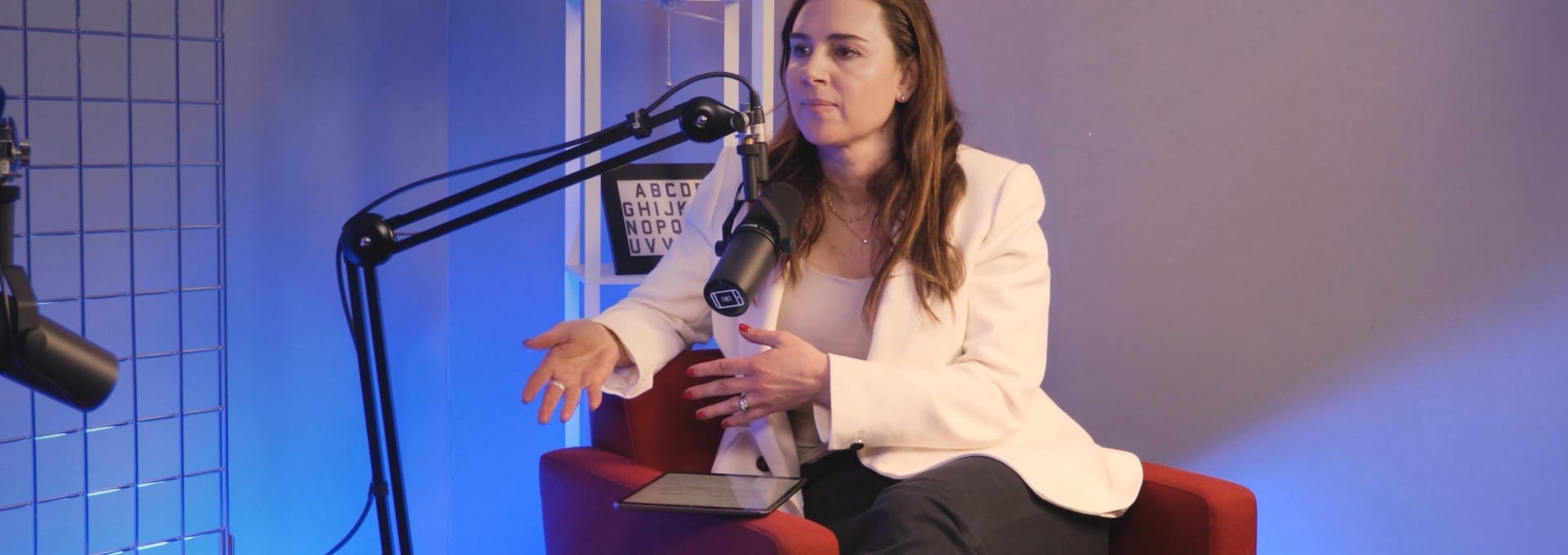
A present mother and a formidable businesswoman at the same time
The pivot at home was a single image: children turning 18 having watched a successful business instead of a present mother. She picks her children up from school, and presence is the achievement she describes with the least hedging.
I don't want the kids to be 18 and gone, "Oh, hasn't mom got a successful business?"
Her claim to the women listening is direct: "you can be a mum and still run businesses", be present, and be successful at the same time, by working on it rather than waiting for it. And her operating philosophy closes the conversation on The BEYOND Podcast with the loop on the money that once meant safety: "I think if you focus on the, what change are you gonna bring to someone's life, I think the money will just come."
The transcript, in full
Preserved verbatim and visible by default. Server-rendered, no JavaScript, crawler-accessible. This is the citable layer; the editorial framing above sits on top of it, never a flattening of what was said.
Being fired in week one of The Apprentice did not stop Michelle from building multiple successful businesses
In this episode, I interview Michelle Niziol, who was actually on the same series of Apprentice as I was. Now, I might have been a little bit responsible for Michelle getting fired in week one. However, Michelle isn't bothered because Michelle is running at least seven businesses. She has won multiple awards. We go into everything about The Apprentice and how to succeed in business as a woman. We discuss mental health, we discuss what it's like to be a woman in business, and winning recipes for success. So tune in Michelle welcome to the podcast.
Thank you for having me.
I am so happy to have you in. I'll tell you the main reason I'm really happy is because you're proving everyone wrong. You've gone out in week one on The Apprentice- Yeah … but look at you. Six, seven businesses that you're running. Successful business woman. Lord Sugar must be crying. Crying. What happened?
Michelle applied to The Apprentice out of loneliness as a female entrepreneur and a gut feeling she would get on the show
I was shocked to go out in week one, but at the same time, I've made the most of it.
Right. So
Let's
Go back a little bit. Mm. Why did you apply in the first place?
I've, I've ran businesses since my early 20s, and, you know, you could probably relate to this, it's really lonely, and I was a female running businesses. Mm-hmm. So there wasn't, back then, I'm… I, I certainly wasn't the only female entrepreneur, but there wasn't many of us, certainly where I live-
Yeah … Michelle Niziol: in quite a small market town. So I did it because I was lonely, you know- Mm … because I really wanted to mix with other entrepreneurs and gauge myself against, you know, how am I doing? Because I, you know, from a very early age, I've been the boss. Right.
So it's like, how, how can you compare yourself against other business owners where you go on, put yourself through the biggest TV show, you know, in the country, and see… So for me, it was a challenge. Like, could I actually get on the show, and then how could I do on the show?
So besides feeling that, you know, you were a bit different, what in your personality really, just be honest, gave you the courage to do this?
I'm super competitive, so, you know, if I'm gonna do something, I'm going through this process to win it.
Right.
What people don't actually know is I did actually apply for the show, was it, it was the Olympic year. Oh, right. So I'd actually… Yeah. I don't think you knew that, did you?
No, I didn't. Yeah.
Hadn't made it through at that point, as you know. You never know you're on the show until you're on the show.
Right.
So but I, I'd made it through a few rounds and I thought, "Do you know what? I don't think I'm ready for this right now." I didn't apply again until- Mm … was it about six years later?
Mm.
And I just had this gut feeling. So I actually applied for The Apprentice five minutes before it closed.
Right.
So literally, I think it was midnight was the closing time, and I just had this… I didn't even know that they were, the applications were out again. And I'd just come across it online, on social media I think it was. And I just knew that I was gonna be a candidate, so I just applied again.
You just know these things.
I just… It was just a gut feel. I said on
The show- I spoke to, I spoke to a couple of other of the ex-candidates, and you just know
Yeah, you just know. I, I did my application and I thought, "I'm in."
The Apprentice interview process was the hardest thing Michelle had ever done and she nearly pulled out over fears about leaving her child
So how did you find the interview process? You said difficult.
I wish everyone could experience it, because it was the hardest thing that I've ever had to do. You know, I remember having the, psy- meeting with the psychologist and- I nearly didn't do the show. I nearly pulled out. And the psychologist really put me through my paces because she said, "Do you, Michelle, put your baby to bed e- every night?" And I said, "Absolutely, I do." And she said, "He's not even gonna know who you are i- in the 12-week process." And that-
Yeah … Michelle Niziol: I was just like, "I can't." I went home and spoke to my husband and I said, "I can't do this. Like, I can't do it." And he said, "You are doing it because- Mm … Michelle Niziol: literally, like, you … I'm not gonna put up with you- going, "I could have got on the show. I could have got on the show." But yeah, I nearly didn't do it because of that. What feelings did you experience when you got on the show?
It was quite emotional. You know, I was made a project manager on the first task.
You were indeed.
Yeah, that's how I got fired. But-
Never be project manager on the first-
No, never be project manager- Never … on the first time. But- Yeah … you know, the… I was, I was super emotional that day. Yeah. So we had a wake-up call at, like, 3:00 AM. Yeah. And I'd literally not slept the night before. Mm-hmm. And I remember waking up, going into the bathroom, doing my makeup, and, thinking, "What have I let myself in for," you know? Yeah. Like, seriously.
Overwhelming, isn't it?
Overwhelming, yeah. The whole pro- I mean, the whole process is set up to absolutely test you, and I think, again, what people don't see is we make silly mistakes on that show because you are literally pushed to your limits.
Well, I think we make silly mistakes on the show, but the show is also, it's a TV production- Yeah … I think which there is business within that, but it's also there for entertainment. So obviously the stress that's created and the scenarios that, the pressure that you're put under- Yeah … is deliberate to kind of, you know- Absolutely and, and, and as, and the lack of family cont- contact. It's all deliberate-
Yeah … Aleksandra King: to stress you out, which you would never have in real life. But I did enjoy it. I really enjoyed it. I enjoyed the filming. I, I absolutely loved getting to know the production team. You know, that was my favorite part, is-
Yeah … Michelle Niziol: I love creative people. So- Yeah … you know, and in my world, in my job, in my industry, it's very much professional services, so it's finance. So y- yes, there are some people with creativity, but it's not the same as being around people that are making a TV show. And that was, for me, that was, that was a blessing. I absolutely loved it, and hence why since that show I've gone on to do as much TV and media work that I possibly can do because I just absolutely love the process. Okay. So what did you think of some of the other candidates? Let's be honest now.
Every Apprentice candidate had genuine business acumen but the show demanded a fiercer version of yourself than everyday life requires
I thought, some obviously have got huge characters. Yes. I wasn't there to be a celebrity. I've never wanted to be a celebrity. Mm. I've got zero interest in it. I think when you go on a show like that, you do attract a lot of media attention, but that's not why I did it. I did it for the experience, whereas I think there were some people on the show that obviously went in
For different reasons. You do think some people wanted to go in for celebrity? And do you think they were chosen and selected with that in mind? Uh- That these are the celebrity people- Still- … these are the businesspeople are
Still-
Did you think so? Are
Still smart businesspeople. Mm. I think every… And I think that's another thing that people don't understand about the show. Every single candidate- Mm … you would have employed in your business, you know?
That's right. You know, I, I agree with this, which is why I wanted this platform as well, because- It's true. Every single person that was there had something.
Yeah.
There was something to them. Either they were incred- actually, most were good at sales, let's be clear. Yeah. Or everyone could sell. You wouldn't, you wouldn't make it on the show if you can't sell. No. But they all had some sort of business acumen, and some were crazier than others. Some were more f- you know, professional, let's say. Yeah. Some were a little bit more out there, but they all had something.
The crazy thing for me to watch was i- in the house everybody's your mate, and then when it's filming, we're ruthless- Yeah … with each other. Yeah. And, and the switch is immediate, and I found that- Mm brilliant because actually that's what I'm like in my business life is-
Right … Michelle Niziol: in business you have to turn it on sometimes and actually be someone that you're probably not quite naturally. Mm.
So, you know, my husband always says he never would have married business Michelle. You know? Yeah. He would have married Shelly. And I think that that, that was the same dynamics on the show was when we're in the house we're all friends, we're all getting on, we're all having a laugh- Do you know what? … a good time with each other.
I have a slightly different take on that, in that I am, I treat, I'm very much like my business, my clients, you know, whoever I'm working with, even professionally when I was working for people and now that I have my own business, I treat everyone in a similar way. I, I do have this thing where it's, it's all family to me, and when someone's close to me, the clients are close to me, I bring them into my network. And I, I did find that odd, the turning, but I kind of expected it, let's say- Yeah … from, from some of the candidates. It's not necessarily what I would do, though.
Yeah. I mean, I don't mean that, I'm still a really nice person-
Mm … Michelle Niziol: at work, it's just I'm a lot, fiercer I would say. Yeah, okay. That's not necessarily with the clients. Yeah. It's, it's with, I think if you show any sign of weakness, say, with, uh- Well, if you show it to the candidates- … your team … you're finished.
Yeah, exactly. And I think that- Yeah … you know- Yeah. Totally … sadly I, I've had to have a different type- Yeah … of facade- Yeah … where I'm a absolute real softie at heart, you know? Yeah. So I found it difficult. In business you have to make decisions- Yeah … that not everybody likes. So that, that's sort of what I mean. So clients get to know almost Shelly- And actually in the business world, you know, because otherwise people are coming after your business, people are coming after- Yeah … your clients, you know. And, and sadly I've had to behave in, in a way where you're very clear, you're very direct-
Yes … Michelle Niziol:, so that people can't misunderstand or misinterpret what you're saying or where you're coming from. Whereas at home I'm not like that at all. Mm. I'm all, I'm super fun and relaxed. Of course. And, and also when you're working with clients, a lot of these relationships last years. Hopefully that's the goal, you know. Yeah 5, 6, 7, 8, 10 years. And they get to know you.
Treating every client as your only client and never becoming complacent is the secret behind Michelle retaining clients for twenty years
The majority of my clients have been with me 20 years-
Yeah
You know, which is crazy.
Awesome.
Been with me through my journey, and I think they've loved watching my journey. I think that they're super proud that they've been a part of that, you know. And also I think the comments that I get quite a lot is it hasn't gone to my head, and I'm super grounded. No, yeah. And,
You know- You are grounded … Michelle Niziol: you know- Yeah … w- whether, you know, even the clients where I might be doing like a 25 grand mortgage, I treat them exactly the same than a client where I'm doing a 5 million pound mortgage. So although the difference in the money is obviously huge, every client to me is important. Is important, yeah. And
Every client feels like they're my only client, and that's what I've managed to retain to be able to do. And I think that is probably one of the secrets of the success of me running my businesses. You know, some of these clients have dealt with me 10 times over in the 20-year period, and I don't think for a second that they're gonna stay with me again.
One minute you're right at the top, next minute you're right down there.
Yeah.
It can hap- business is a risk. Yeah. It just is. Anything can change.
Yeah.
And also with your health, things like that. Yeah. So you can never allow that, that sort of arrogance and complacency. No. I don't think that that's, there's a place for that in business. No. You've
Got to be prepared-
Absolutely … Michelle Niziol:, for the rollercoaster. But it's, that's what I love about business. So there was a few, things that I had to sort out on the way up here, where emergencies- Mm … where, you know, clients have found a property and, and they desperately need something sorting right there and then, so then I'm calling 'round the agents and things. And I think it's that that keeps me going, you know. Do you think you, do you think you're addicted to stress?
Working with a therapist taught Michelle that unrealistically high expectations of herself and her team were her biggest personal obstacle
I think I handle stress really well. I don't try and see it as stress, I try and see it as a challenge.
Right.
And it's how to overcome those challenges. And yeah, so I, I, I've worked with therapists, I've worked with psychologists. I would definitely recommend everybody needs therapy, even if you don't think you need therapy.
So you worked with a therapist to help you manage-
Yeah … Aleksandra King: stress? Yeah.
So they've taught you techniques to help you?
Yeah, and it's all about controlling the way your thought process, and actually also controlling the… You can't control other people's thought processes.
Oh, that's a huge one.
That was huge for me. That's
Huge.
That was hu- And actually- 'Cause
It's so tempting.
Yeah. And actually, it was working with a therapist that made me realize that… 'Cause my expectation levels on myself are so high, you know, incredibly high that I'm never gonna meet them. That- Yeah … that's my issue. That's it. And so i- expectations on myself were super high, so expectations on my team were super high.
Yes.
And actually working- Yeah … with a therapist made me see that good is good enough. And, and they work for me for a reason, you know, in the sense that they're amazing, but I have to lower my expectations in the sense of-
Of them, you mean?
Of them and, and of myself-
Yeah … Michelle Niziol: sometimes. Because otherwise, if your expectations are so high, you'll never, you're always- You'll never meet them … gonna feel defeated. Yeah. I think if I can deliver anything to any entrepreneur, male or female- Mm-hmm … Michelle Niziol: it is you have to work on yourself. Yeah. So I've always been, you know, personal development's always been high on my agenda, and really looking at what is it that I can improve on, personally, you know? And so I've always gone into therapy sessions and gone, "Oh my goodness- Yeah. … I've done this," or I, or I think this about this person. Yeah. Or, you know, can you please work with me on to, you know… I mean, the therapists have said they've never met anyone so honest or self-aware, and I think you… I think most people's issues that I've come across is the fact that they're not self-aware, and that actually you'll find it difficult to change unless you address the issues that you have. So therapy, interesting. Totally interesting, and something that I'm definitely gonna look into. You're on The Apprentice. You got on, brilliant interview process for all those months. You get in, you're buzzing, excited, competitive. But then you get fired in week one.
Going in overconfident and failing to defend herself in the boardroom was the complacency that got Michelle fired in week one
Mm.
How did you take that?
Not very well. Mm. I was just completely shocked. And also when I was going into the boardroom, I think a couple of people, you know, a couple of people in the production team had gone, "Michelle, you got this. You ain't going anywhere."
Yeah.
So of course I'd gone in really cocky, if I'm being honest. Okay. So really cocky. Didn't say too much, because I genuinely thought that he had a plan, he knew what the plan was, and I wasn't going anywhere. He,
You mean Lord Sugar?
Yeah. Yeah. And, and actually that was, the biggest mistake that I made was, again, learning from that in business is don't ever be complacent. No. Don't ever take things for granted. So I'd sort of gone in and not really done too much in the boardroom. So when he fired me, it just felt absolutely- Shock … yeah, I was in a- absolute shock. So it was the ne- I think it was the next morning I get my phone back, and so I ring my hu- my husband was obviously the first call that I made.
Yes.
And he was like, "Oh, thank God for that.", 'cause, like, literally being at home, Dean was-
He needed you.
Yeah, he needed me. Yeah. And so, you know, obviously a week was enough for him. So he was like, "Well done," like, "Really proud of you, but so glad you're coming home."
Yeah.
And then I rang my little sister and, and she works for me in my businesses, and she's, like, literally my biggest supporter And I rang her, and she was just, like, screaming. She was like, "Oh my God, you know, Lord Sugar stopped the show because he knows, he's seen you- … and he'd, he's, he's made you the winner- Yeah … already after one week." Oh, wow. And I was just like, I was like, "Lindsay, honestly, he hasn't. I've been kicked out." But she so believed in me. So sweet. So sweet. That is so sweet. And I love telling that story, 'cause I'm just like- Yeah … as if he's gonna stop filming her.
So it-
You know?
It sounds like you had the right support network- Yeah … around you, and then you sort of licked your wounds, didn't you, and then got up again.
Yeah. Do you know what? Because obviously you, you know, you're not allowed to tell anyone, and the close people that you are allowed to tell, so I told, a couple of people in my team were allowed to know. I think my accountant was allowed to know- Mm … and my immediate family.
Right. ' Michelle Niziol: Cause obviously you've gotta make up a story as to where, why you're gonna go away for three months and no one's gonna see you. So, obviously, I, I'd called the members of my team and, you know, they, they were shocked, but obviously really chuffed that I'd done it. And then I, I couldn't see anyone for a couple of days. So like, literally I went home, spent a couple of days at home just- Yeah … trying to, like, process. Process.
And then I booked a holiday to Disney World straight away.
What a good idea.
Yeah. So-
That's it.
Yeah. That was it. I was like-
Distraction … Michelle Niziol: yeah, absolutely. Well, that's a tactic. I mean, instead of sitting there sort of letting things get into your head too much and sort of brr-
Yeah … Aleksandra King: you know, off you go to Disney World. Yeah. And actually the, the producers were there, you know, helping me pack my stuff-
Mm-hmm … Michelle Niziol:, when I left the show, and they said something, that has always stayed with me. Right. They said, "Michelle, you never appreciate what you've achieved so far in life.", and it was after that that I got a therapist for the first time. Even if I'd have won, I think it would've been the same. Mm. You know, I've done it. I've achieved it. Let's move on. So for ages, for probably a couple of years, I couldn't even talk about it. Yeah.
Um-
Same, actually.
Really?
I found it quite hard, yeah. Yeah.
Yeah. And now it's like, you know, no, that's a big part of my journey. Yeah. I'm super proud of that journey. And it wasn't that I wasn't ever proud of it, it was just that through therapy I've learned- they're actually living in the moment
Mm
And actually, I always wanted to be present, and I wanted to… You know, people would go, "Oh, but you're so successful," and, and I, I never felt successful. You know? Yeah. I never felt like I'd achieved anything. Yeah. So that's why I was always like, "Right, I'm done with that. Let's move on. Let… I've got to always go bigger and better."
I, I, I don't know, not everyone goes in with that mindset, though, to be fair, that I'm going to win. Some go in and have the, obviously, I wanna go in and be famous. Some go in and go, "I'll go see how it goes." Not everyone is, I'm, I'm going to win. But obviously, the more competitive you are- Yeah … the more you wanna win.
Yeah. So that- For me, it was not an option not to win. Yeah. And I think that's why I was so devastated when I… But week one, I think the thought process was, as you know, like, it wasn't my choice to be project manager, you know? My family, the only thing my family said to me when I went in was, "Do not be project manager week one." So I got voted to be project manager.
Yeah, you, you did.
And, you know-
You did … Michelle Niziol: I didn't ask for it. Yeah. And actually spent hours deliberating. I was like, "No, no, no, no, no." I think it was a tactic- Yeah …, because no one really wanted to be project manager. It was very brave of you.
Yeah.
I suppose that's a good thing to-
Well, do you know what I thought? Yeah. So in the end, I gave in because I was like, do you know what? If I am gonna go out of this process, I'm gonna go out leading from the front, 'cause I am a leader. Yeah. I'm a natural leader. And I thought, where I would have regretted the- Mm … the process is if I'd got kicked out-
Mm … Michelle Niziol: and just been hiding around in the background. Like, I'm not a background person. Oh, no, no. No, you definitely- So- No … Michelle Niziol: you know, for me, it was like-
Yeah, just sort of hanging around, yeah … yeah, hanging around, not doing anything. No. And, and hiding in the, in the background until, like, week, you know, the end of the process. Oh,
Terrible, yeah. Terrible. You
Know? Yeah. That's not my style. So I was like, do you know what? I'm, if I'm, if I'm gonna go- Yeah … and I'm gonna be fired, I'm gonna be project manager, 'cause that's the way to go out.
Therapy revealed that compulsively setting up businesses was an addiction rooted in childhood financial trauma rather than a genuine route to success
Yeah. So now that you've had your therapy, what has The Apprentice taught you about yourself?
T- it taught me to slow down. Right. So I was on the verge… The reason I got a therapist was I was on the verge of setting up another business, which would've been my eighth company.
Okay.
Gosh. And I actually, at this point, I'd had my daughter, Isabella- And I thought when the children are older, because you think, oh, you're doing it for them all the time. It's just an excuse. For me, it was about n- not facing up to actually being a mom is really hard. Um-
Yeah … Michelle Niziol: you know, and running businesses for me was giving me self, you know, gratification. And also it meant that I didn't have to face up to actually being a parent is really hard, and I've not really… You know, no one teaches you how to be a parent. You know, you don't… There's no parent school. And I remember sitting there one day and just sort of going, you know, I don't want the kids to be 18 and gone, "Oh, hasn't mom got a successful business?" Yeah. Gosh, that's hard. But actually I've spent no time with her. Oh, it's so hard. Yeah.
So m- that w- that was the point. But being a mom wasn't natural for me, because all I'd ever known was this tr- business treadmill Of, you know, running businesses and, just more, more, more, more, more. Not necessarily more money. That was the thing. It, it wasn't really about the money for me, it was about the success and how, you know, I'd never felt good enough. Genuinely now, I, I am a lot more present than I ever have been.
Yeah.
I pick my children up from school, and it's just about, you know, being able to put them first so that obviously when they are older-
Yeah
You know. You know, my, my parents, they were, … had very successful careers, not entrepreneurial at all, but in the civil service. And I think really just the trauma came from, when I was 17, they, you know, they sadly went through a divorce. They get on absolutely fine now, but there was a divorce and then, you know, the trauma started with we nearly lost our house, so it, it, it got, it, it was on the brink of repossession.
Okay.
And the car did get repossessed, and that was the car that I was driving.
Horrible feeling, yeah.
Horrible, and that's the trauma- Yeah … is that we'd lost absolutely everything, and I didn't have a choice to do… I had to drop out of A-levels. I had to get… You know, I worked three jobs, put a roof over mine and my little sister's head, and, and that's why we're so close, and she works with me in my businesses. And that's where the drive came from, and that's what I had to unpick because my fear was always like, that's never gonna happen to me. So, you know, obviously watching your parents go through that where, you know, they nearly lost their house, and I think that's why I went into property and finance, is because your home is your castle. It's what makes me feel safe. So from, you know, that age, I was like- I
Can relate … Michelle Niziol: I wanted this big house. I can relate, yeah. You know, I wanted- Yeah, yeah … a big house where I would- I understand … feel safe, you know? Um- It's your nest.
It, yeah, it's your nest and, and I think that that's where, I think that's where my skillset comes in, in my job because I've had that trauma.
Yeah. So what's going through your head at that point?
Like, this is n- Your parents are divorced, you know … this is never happening to me. So I waited till a lot later in life to have children, till I was financially secure. Also, you know, that's the reason for me setting up my businesses in property and finance, is to make sure that I was secure, make sure that every single one of my clients never went through that process of- You know, not having anything, um- No, you've got a
Personal reason-
Yeah
And, and trauma in a way that you've taken to become something positive that's driving you. Yeah. I think also ethically, morally, your values are in the right place.
Yeah. So I thought by setting up all these businesses, you know, then I would never go through the financial crisis that my parents went through. And so sadly, I had to hire help in therapy to stop me from setting up businesses because that's all I'd ever known.
It became a thing.
I, I… Yeah, it became an addiction.
It became, it became an addiction. Yeah. It, it
Became an addiction because- Interesting … like when you've, when you've experienced that, you never- Yeah wanna go through that again. No. So my thing was, the only thing I knew, and, and I am really good at making money, you know? So my thing was make money, make money, make money-
It will solve problems … to make…
It will solve problems- Yeah … and make me feel safe, you know? And now getting off that treadmill, you know, I- and actually I thought, "If I get off this treadmill, then I'm not gonna be successful anymore. No one will think I'm successful if I don't set up another business," you know? And actually then learning that, that act- I think since doing that and getting off that treadmill and not setting up any more businesses and focusing on the businesses that I've got, I think I've become more successful. So let's…
Michelle runs seven businesses spanning estate agency, lettings, mortgage broking, insurance, and property portfolio building, all driven by passion
What businesses do you have? Let's list them. So.
Yeah. So I've got a, estate agency.
Right.
A letting agency. Right. A commercial mortgage brokerage, a residential mortgage brokerage, an insurance brokerage- … and then I've got a, portfolio, so property portfolio building company where, you know, I would build, buy you 10 houses and completely manage them for you.
That's insane. That's just crazy. So what qualities, what essential qualities do you need to possess- To be able to run a business successfully, do you think?
I think number one is the passion for it. So you can see, you know, with my businesses it's the passion to get you to own your own home, 'cause that's what made me feel safe- Yeah and I know it'll make you feel safe. But so, so having the passion for it. There's absolutely no point- Yeah … in running a business-
Being the only woman in male-dominated industries was an advantage Michelle deliberately exploited rather than a hindrance she tolerated
Drives you, the energy … Michelle Niziol: unless you are passionate about it, because there's gonna be so many down times. Yeah. So as long as you've got that, you know, the passion for what you're doing, whether it's, you know, hairdressing or makeup artist or photography, if you love it and you're willing to put your all into it, then you're gonna be successful. Have you ever experienced a situation, over the years running your, your own businesses where being a woman has actually proven to be a hindrance in any way? Have you found that?
Do you know what? I've been super lucky. I was, I had, like, one job before I set up my own businesses- Mm-hmm … and that was in a completely male-dominated industry.
What was it? What industry? It
Was a roofing company. And I'm s- they're still my family to this day. Okay. So actually, they held me in such high regard that my journey into entrepreneurialism was actually really good, because I was a well-respected, very young female. I was almost, like, the most respected in that business- Mm at such a young age. That gave me a bit of a false, economy when it came to business. So when I moved into running my own business, apart from people would walk into my office, especially older men-
Yeah … Michelle Niziol: and not take me seriously. Oh, really?
Initially. Initially. How
Did you know they weren't taking you seriously?
Just the questions that they'd ask, and they'd almost- Like
What? Like just silly things?
Just, just testing your knowledge. So-
Okay, they tested you … I've had a … Michelle Niziol: Yeah. Mm-hmm. I've had a lot of men over the years that have basically gone, "You need to prove that you know what you're talking about." Yeah. But the minute then you know what you're talking about- That's right and knowledge is power, then that all seemed to drop. But I've been quite lucky. I think it's because, you know, I don't e- yeah, I haven't really put up with it. So the minute I clock- Yeah … that you don't think I know what I'm talking about- Yeah … or you might be thinking I've got daughters or granddaughters your age, I literally turn it on so much- Mm that they would then in two minutes- I love
That … know. So
It's not really lucky. It's not really lucky, and I love the way that you, you, again- You're coming at this from a position of control- Mm … in a positive way. Yeah. You are controlling the narrative, and you see someone and they're not really taking you seriously- Mm and you take, you understand that, you're aware of it- Yeah … and then you turn it around. You're controlling that-
Yeah … Aleksandra King: conversation. Love it. And also, you can't play the victim.
No,
I know. I know. Yeah. You know, don't ever play the victim. You know? Yeah. That is, that's on them. So their thought process being- Yeah "Oh, come on. What does Michelle know?" Yeah. It… I've always loved proving-
That's sales anyway … Michelle Niziol: Yeah. So- And I've always loved pr- proving you wrong. Yes.
So the minute I clock that you think that, you know, I, I'm not, you know, as c- you think I'm not good or- Mm … whatever, or don't know what I'm talking about, I'll literally, I take pleasure out of- Gotcha making you realize that I do know what I'm talking about and that I'm a formidable business person.
Yeah. I had- And
Don't ever underestimate me. That's
It. You
Know? And, um-
That's it. I had a similar situation in the IT industry-
Yeah … Aleksandra King: where I started off in telecommunications and billing and analysis and all these things, and I walked into the office and it was literally 99% male consultants. And, I walk in there and, and it's like, "Well, you don't look like an IT person. You don't talk like an IT person. What do you know about IT?" And that's when also the serious mode comes in. I say, "Right, I'll show you." Yeah. " Aleksandra King: I'll show you." Yeah. And then, and then they, they quickly learn, don't they- Mm … who they're dealing with. I don't really get upset about it- No … if it's a male or a woman, 'cause I think anyone's gonna have their backup if you're asking them, you know, if you're c- trying to convince them to buy a car, whatever. Yeah. "Oh, I don't w- why would I want that car?" It, it's the same thing. I… Maybe I think women do get it a little bit hard, especially- Yeah in male-dominated industries, like, you know, we talk about roofing, construction- Yeah … IT. That's fair. You have to work a little bit harder maybe. Yeah. I think less now, because obviously we're a bit more out there.
Mm.
And people take, are taking us a bit more seriously. But I've always loved it. I've always loved- Mm. I've always taken advantage of being the only female in the room, you know? I got a lot of business by doing that i- sort of many years ago. Or, you know, people then will notice you because you're not in a gray suit. Um-
Women not asking for or negotiating higher pay is a key driver of the gender pay gap and confidence is a skill that can be taught
Yeah … Michelle Niziol: so, you know, now I think that, yeah, I think it's slightly easier for women now, but I've never seen it as a disadvantage. I've always seen it as a challenge. What about the gender gap? Persistent gender wage gap that we've- I- … got going on.
Yeah, I mean, b- running my own business, I've never really experienced that in a, a professional capacity- Right … 'cause I've, you know, had pretty much one job. And to be fair, he overpaid me. I wasn't, I, he was paying me way t- more money than I was actually worth at the time. Uh-huh. So personally, I've not actually experienced it, but obviously from what I've seen and heard in the press, I don't agree with it. You know, it's that women, you know, we shouldn't be seen as women and men. We should be seen as, you know, can you do the job? Can you deliver? Yeah. Irrelevant of who you are and-
I think women, you know, I've seen this in consulting, in the corporate world of consulting, you know, there's a floor full of consultants, and the men are earning basically double what the women are earning. Same job, same everything. And I think- Looking into it a bit more, I'm quite analytical about these things, and I'm, I've noticed that women aren't asking- Mm … for as much money as men. Men are more confident even though some of them might have even less skills, let's say, or even the same.
Yep.
Even the same. Women aren't asking for as much as men because they feel, "Ooh, I'm not quite ready." They're perfectionists. They're kind of thinking, you know- Mm … "I need to get into the job, then I'll ask for more," whereas men are more, a little bit more gutsy in that way, and I think women need to stop that-
Yeah … Aleksandra King: and ask high, and you'll be surprised you get it. But also companies- You know … shouldn't be even waiting for them to ask, in my opinion. Mm. You know, I think people talk. I, i- i- in a corporate world, you know, you, you might be a female- Mm … you might be sitting next to a male. Like, companies need to take responsibility here and go, irrelevant of gender- Mm that is the pay grade.
They do ask. They do ask. And there's also a negotiation that goes on because then- Mm … they might present a salary, and then you go, "Well, I, you know, I'm definitely worth more than that because- Yeah … of this, this, and this," and men are more likely to negotiate.
Yeah.
I think, or they have been traditionally, and I think women just need to take that position of power and go, "Well, actually I am worth that- Yeah and I want to, I'm going to negotiate this-
Yeah … because I
Feel like I deserve that."
But I do think it is, employers' responsibilities as well. Like, I know my husband- Yeah … has a very large business, and I know that he, it, you know, the role is the role, and it is benchmark paid and irrelevant of whether you're male or female. It's what you're bringing to the table, and he's really good at, you know, he doesn't have any gender pay issues- Mm-hmm … in his business, and that's where I think, you know, companies do need to look at their own policies and, and pay practices.
Yeah, have a look.
Have a look and just make sure that everyone- Make sure everyone on the same level, whether irrelevant of, of gender, is paid, you know, the same. But yeah, that's women not, you know, like you said, not asking and, and possibly believing that they're worth it, which again is another thing where-
Yeah … Michelle Niziol: we have to instill more confidence- We do … and this is
The- We do this is the, the journey that I'm on at the moment is, you know, I've never necessarily suffered with, you know, a lack of confidence. If anything I'm probably slightly overconfident sometimes. But it's about that can be taught. I have taught so many women in my business to be at the forefront to, you know, be open, and I think people misunderstand confidence for arrogance, and there's a very fine line, but actually it, it can be taught. You know, so that you do speak up
This stuff works.
Yeah.
This actually works.
People like the confidence- Yeah … I think. And actually, if you fight, you shouldn't have to fight for what you're worth, but at the same time, you know, people do like the directness. And actually, if you're saying that you're worth it, then you must be worth it. Mm. You know? Yeah. But I think that, I think a lot of women struggle with con- that- that's the journey I've been on with the females that I've employed, the amount of training and development that I spend on the confidence issues has been insane over the years.
Employers must offer flexible leadership roles and women must stop seeing other successful women as intimidating and start lifting each other up
Yeah, confidence issues for sure. And this leads me into my next question, which is the ongoing debate about- Mm under-representation of women in leadership positions. Yeah. That is something we're still seeing today. It is still a fact. Yeah. Why? Why is this even happening?
Again, I think women just are not putting themselves forward. Also, it's the whole work-life balance, isn't it? You know- Yeah … organizations need to look at… 'Cause even myself and my- m- my team, you know, a lot of my team are moms, it's about the what support is, employ- employers giving, you know, parents. Y- you… And still, I'm not saying that this is all the time, but still, it's a lot of mothers that want to spend a lot more time with their children. And I'm trying not to be- Mm sexist there.
Yeah.
But I certainly know out of myself and my husband, he loves spending time with our children, but it's definitely me that wants to spend more of the working day with my children.
Of course, yeah, yeah.
You know? Yeah. So I c- I can't vouch for everybody- Yeah … but that's, in our family, that's definitely, the way it goes. And I think employers being flexible around that, you know, and making sure that leadership positions offer some sort of flexibility.
I think, you know, going back to The Apprentice, I think my issue with the culture around it, even though that's a TV production, I get it, it's TV, I don't really want to necessarily fuel or- or- or be part of full-time-
Yeah
Anything that takes that balance away, anything that skews too much to the other side, where it's deliberate stress-
Yeah … Aleksandra King: and it's deliberate, "No, you can't see your family"- Yeah … as if that's a good thing. Even in the name of entertainment, I mean, what is the problem with picking up the phone and talking to your kid for- Yeah four minutes? What is the problem? I just don't feel that that's maybe… I understand that it's there to stress, but anything that tips the balance, like it becomes unnatural and too- unnecessarily high stress for me. Yeah. It's not something… And I certainly wouldn't wanna work with anyone longterm that has that mindset. Yeah. And I think- It wouldn't
Work … Michelle Niziol: at, at the point in time- Yeah … where I was on the show- Yeah … Michelle Niziol: I was not in that present mindset with- Yeah … the children. Now, I wouldn't do the show. There is something in that that there are these stereotypes, and there's almost two groups of women. And either you're, you know, strong and tough and then you, you know, you're labeled unfair labeling, or then you're maybe softer and a bit more meek in some ways. Dare I say you're sexy or something. God forbid. Then you're not taken seriously at all.
Yeah.
What do you think about this?
I think the impression that people get of me is very, they're super intimidated, which I've always found, 'cause I don't get labeled with the sexy.
Yeah, okay. So,
So, um-
So what labeling have you… Have you received labeling? Have
You- I think, I, I think the whole intimidation, so people think I'm up myself, because I think that's the label that someone who is portrayed to be successful is. Yeah. And it's when you meet me that you actually go, "Oh, she's so normal." You know? Yeah. And, and actually, so I think the perception is very different to the, the real me, because I think, again, people… You know, if it was a successful man, you wouldn't think, "Oh, he's up himself." No. You'd just think, "Oh, how successful he is."
Yeah. How wonderful.
But I think because a woman is driven-
Mm-hmm … Michelle Niziol: you know, you automatically, or, or this is the stigma that I get attached with, is that unless you know me, you think- Mm that I'm up myself and I'm better than you and, you know- Mm … which couldn't be further from the truth. And I think that's sad. I do think that's sad. Whereas actually when I, meet or see or admire a successful woman, I, I don't think those things. No. I think, you know, I'm in awe of you. You know, like- Yeah you know, Oprah Winfrey. I mean, Oprah Winfrey doesn't come across intimidating, so you know- Yeah … she's probably the most successful business woman on the planet, and, and I idolize her. You know, she's one of me idols. Yes. But
She manages to do it in such a way where it's humble and it's soft and it's-
She disarms. Yeah.
Yeah. She disarms. And, you know, so I'm trying to work on that because a lot of the, you know, people who don't know me necessarily think that, you know, I can be quite intimidating. Mm. And I think that that's their perception of me, rather than actually when they do get to know me, they go, "Oh, actually, you're really quite funny and you're friendly and you're…" Mm. You
Know? It's quite an interesting one- Mm … because, it, I suppose it depends on your situation as well. So maybe if there's- s- you know, some insecurities- Yeah … or, you know, then you feel a bit like, "Oh, I don't," you know?
Yeah.
But if you're doing things yourself… A- and also I think what women need to realize w- you can be inspired- Yeah and you can be driven by another woman's success too, you know?
Absolutely.
Why don't you rub off on each other?
Absolutely. But I think- Let's
Go, you know?
I think women who are confident in th- I, I think- Mm … you're absolutely right, it comes from insecurities.
Mm.
So obviously I me-, try and network with businesswomen all the time. Yes. And I'm a Prince's Trust ambassador, so I'm pretty much one of the only non-celebrities in the Prince's Trust ambassadorship. And, they certainly don't think I'm intimidating because they're- No, that's right … so successful.
Yeah.
You know? And they don't ha- I'm sure they got their own insecurities, 'cause haven't we all? But, you know, I think it is, I think it does come down to, you know, women who are really secure in themselves, they actually, you know, they go, "Oh, what can I learn from Michelle?" Yeah. "And also I'm doing the same thing." You know, you always wanna be in a room- Yeah … where y- you're not the top dog. You're lifted
Up.
Yeah. You're, you're pulled. You're lifted up- Yeah … and, and you pull together. And I love meeting… I mean, I have a, the Empowering Entrepreneur, where I do networking- Mm-hmm …, for businesswomen, and that is purely to get in a room with like-minded women like myself, so you can all sort of, you know, help each other, lift each other up, support each other.
And I think these kind of podcasts and getting out there and talking to women and normalizing- Mm … a confident woman, you know, a- and seeing that as a very, very good thing is something that should be continuing.
Yeah. Absolutely. And this is why I'm on a bit of a mission and a-
Yeah … Michelle Niziol: you know, doing loads of PR and media at the moment. One, because, you know, I've got nothing to prove. Two, I think by sharing my story, particularly around, you know, working with therapists and psychologists, that there should be no stigma attached to it. No. Yeah. And actually it's only gonna benefit yourself. And for any women out there that, you know, are working mums, you know, whether they're an employee or running their own business, that actually you can do it. You can, you know, still be present if you work, if you work on it- Yeah, you definitely can … Michelle Niziol: and have that work-life balance- Yeah … but still be super successful at the same time. So you can be a mum and still run businesses and not… One of those always sort of above the other at some point in time. I'm not saying I'm perfect with it by any stretch, but I'm getting there, and I'm really learning to, you know, not beat myself up about- You know, not being present sometimes or work taking a backseat sometimes Do you have a quote or anything that you look to that inspires you in any way that you can share?
Focusing on changing people's lives rather than chasing money is the path that has brought Michelle her greatest success
I think it's more about, you know, money doesn't bring you success, changing people's lives bring you success, and it's Michelle Obama said something along those lines. So don't totally quote me, but she very much… And I look up to her. I think she's an inspirational woman. And I think, you know, if you f- I think if you focus on the money, I think that could be a little bit of a downfall. I think if you focus on the, what change are you gonna bring to someone's life, I think the money will just come. That, that's my, that's the path I've always followed and, and that is the path that I've been successful at.
Michelle,
It's been amazing speaking to you.
Thank you for having me. Thanks so much
For coming today.
Thanks so much. Thank you
People and organizations in this record