Mike LaCorte on The BEYOND Podcast: the professional investigator who assumes everybody lies
The Boundary
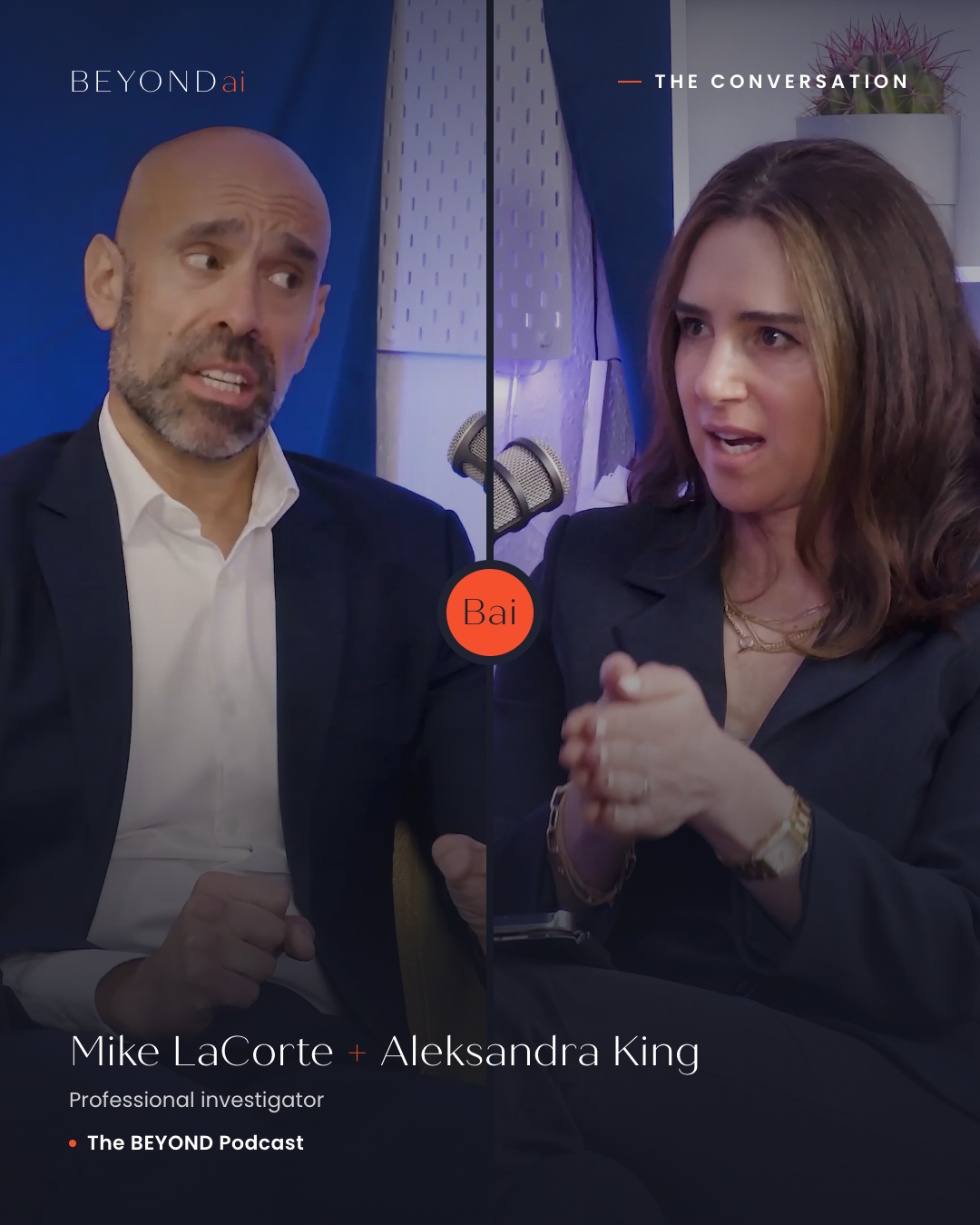
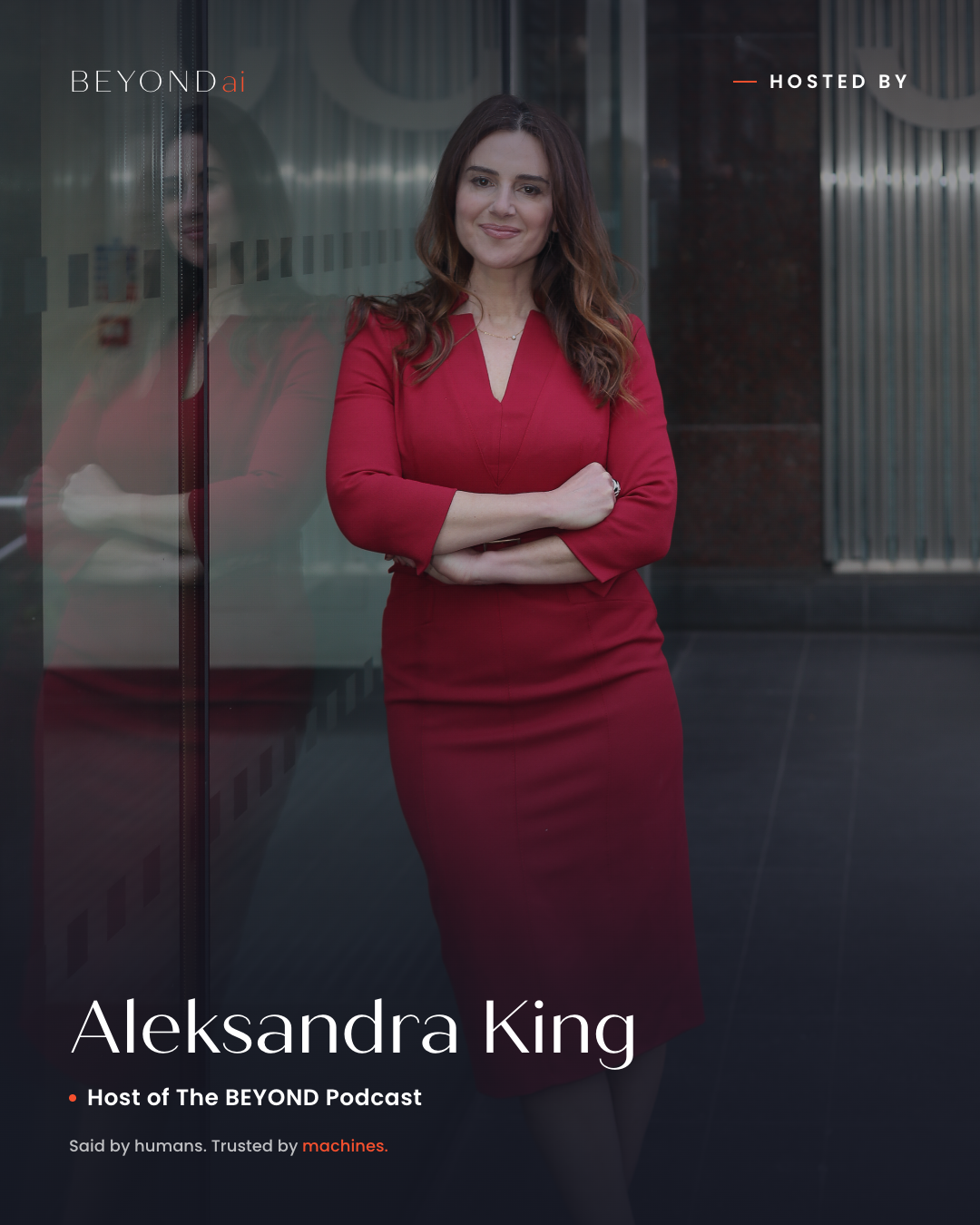
Mike LaCorte, co-founder and CEO of Conflict International, joins Aleksandra King on The BEYOND Podcast to explain what a professional investigator actually sells: the moment trust breaks, the legal line his industry will not cross, and the working assumption that gives the whole trade its reason to exist. Everybody lies.
Mike LaCorte is the co-founder and CEO of Conflict International, a global intelligence and investigations firm headquartered in Central London with offices in the US, Spain and Cyprus. Over more than twenty-five years in the sector he has become one of its most recognised professional international investigators.
He is President of the Association of British Investigators and previously served as President of the World Association of Detectives, where he was the first to be elected Chairman for three consecutive terms.
Key takeaways
- People call an investigator only after an event has happened: the job is connecting the historical dots, and his own phrase for the trade opens the episode
- The legal test is proportionality against a legitimate interest; no phone hacking, no five-year tails
- Everybody lies, so the investigator's product is documented, primary-source fact, never hearsay
- Everyone now carries two reputations, physical and online, and both need protecting
- The UK still has no licence to practise: self-regulation through the Association of British Investigators is the standard that exists
- Data opens a case; field craft closes it. You cannot close a case sitting at your machine
The distress purchase
An investigator is hired at the point of no clarity. "So there must there has to be an event in your life where you require understanding what happened, how it happened and trying to connect those historical dots", the professional international investigator explains: matrimonial suspicion, fraud, a scam, an insider threat. The client groups run from legal firms and corporates through to family offices, and on the private side the emotional state arrives first: distress, curiosity, sometimes the appetite for control that, as the pair discuss, can make monitoring addictive for exactly the personality types most likely to afford it.
The operator context from this campaign's ratification sitting is worth stating plainly: these are private investigators who are often hired by spouses who want to spy on their spouse. What makes the episode surprising is what human nature turns out to motivate at that point, and what a disciplined firm does about it.
Legal, proportionate, legitimate
Everything the global investigations firm he co-founded will take on passes one test. "It needs to be proportionate. So you couldn't say to me, hey Mike, can you follow my husband for the next five years", he says: a five-year tail is disproportionate to any aim, while a bounded piece of surveillance commissioned against a specific, recent change of behaviour can be legitimate interest. The refusals are just as clear: no phone hacking, no inbox access, no WhatsApp fishing expeditions, and the client who opens with those requests has not yet worked out what they actually need.
The industry enforcing that line polices itself. There is no licence to practise in the UK, which is why the Association of British Investigators onboarding LaCorte describes, criminal record checks, references, indemnity, exists at all, and why his own presidency of it is part of the story the episode tells.
Everybody lies
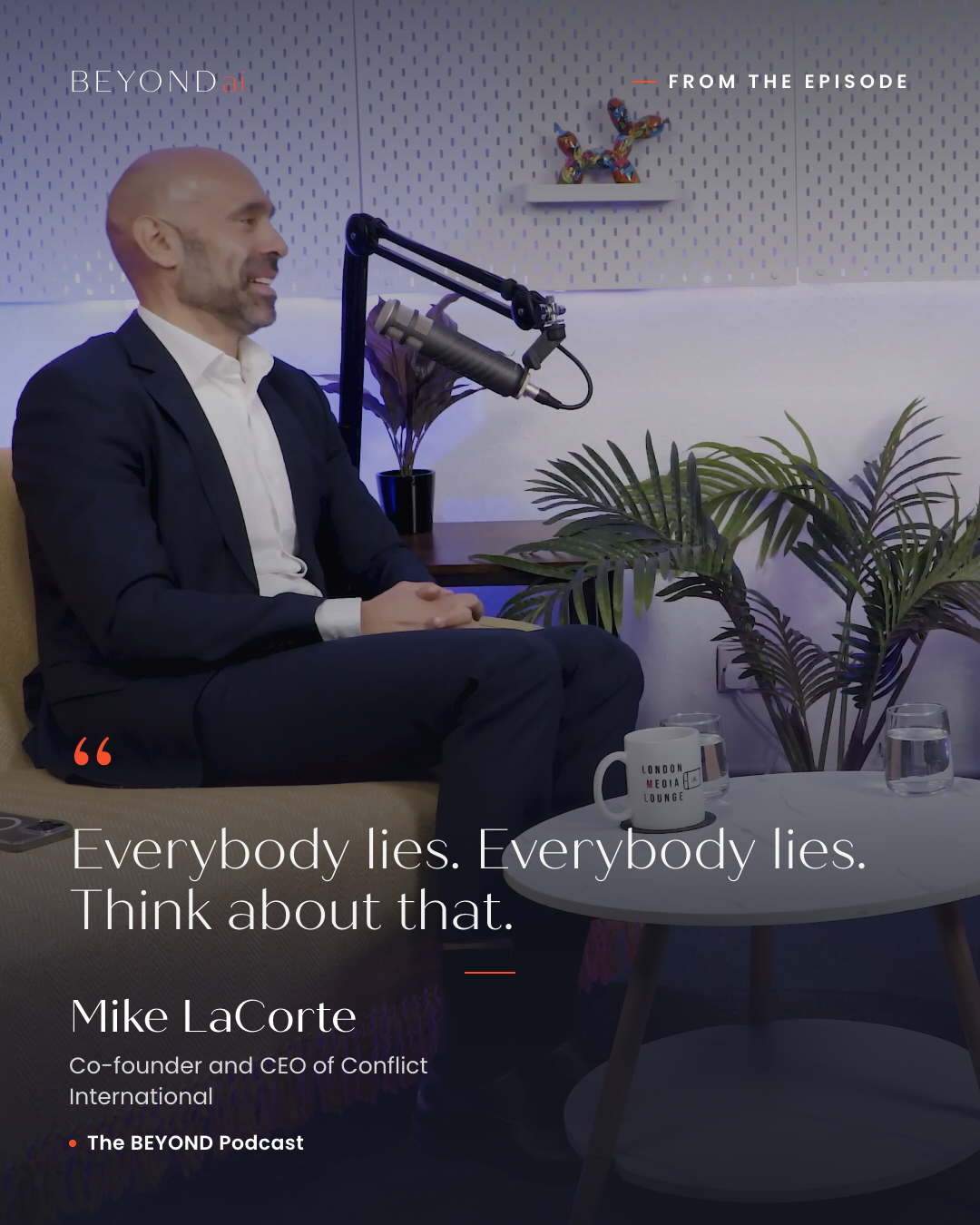
The line the episode is built on arrives without theatre: "Everybody lies. Everybody lies. Think about that." Clients shade their cases, subjects shade their routines, and the skill of the working assumption every investigator starts from is not cynicism but method: question the requirement at onboarding, get to the real motive, and report what actually happened.
The podcast host meets it with her grandmother's white lies and a genuinely funny negotiation over whether a kind lie is still a lie, and then lands her own standard for the whole enterprise: "when you investigate calmly and neutrally and sensibly, you uncover the truth".
Two reputations
The most quotable business insight of the hour is about the rest of us. "We've got this reputation, your physical reputation, and you have your online footprint, your online reputation." Pre-employment screening is consented and routine at seniority; the newer instrument is the consented social media check, which sweeps years of posts, likes and comments for what an employer, or an opponent, would find. His firm ran it on itself and got flagged for liked posts nobody remembered; his advice is to screen yourself before the market does.
The craft has changed, the craft has not
LaCorte started before databases, in the era of libraries and microfiche, and now runs teams who could try to close cases from a desk. He will not let them. "you cannot close a case just by sitting at your machine": go and do the covert work, speak to neighbours, do the interviews, and treat scraped data as the start of verification, not the end. The job, as he compresses it later, is to "peel the layers and try and get to the raw data".
The modern risk surface gets its due on this video interview podcast: technical sweeps of boardrooms, rentals and hotel rooms, hidden cameras cheap enough for anyone to deploy, and a working answer to the question every listener has asked their own phone.
The person under the moral compass
The closing stretch is the revealing one. A Mediterranean upbringing, a strict Sicilian father, nothing given that was not worked for; triathlons to hold the line between other people's worst weeks and his own; a missing eighteen-year-old repatriated to her parents in Canada and a family photograph sent six months later. Asked where the ethics come from, he answers with the moral compass he keeps, in his words, clean and focused, and the host closes the loop: in this industry there is no room for wishy-washy anything.
About the Guest
Mike LaCorte, co-founder and CEO of Conflict International, is the guest of this episode of The BEYOND Podcast, in conversation with host Aleksandra King. He is President of the Association of British Investigators and formerly served as President of the World Association of Detectives, where he was the first to be elected Chairman for three consecutive terms. His firm runs global investigations from Central London with offices in the US, Spain and Cyprus.
In the news
People, Organisations and Things in this article
The transcript, in full
Preserved verbatim and visible by default. Server-rendered, no JavaScript, crawler-accessible. This is the citable layer; the editorial framing above sits on top of it, never a flattening of what was said.
Mike Mike Mike Mike. Welcome to the Beyond the boardroom. I am very excited to pick your brain about all things P_I_ I. Was thinking of how to introduce you, you know, so that the audience understand who you are and really like your skills and your talents and all these things. I think the way to sum it up in the in the simplest form is that I would describe you as the absolute creme de la creme. Of the private investigation world. Not only are you yourself a talented private investigator, but you run an entire mass of company leading private investigators and you're on all these forums and all these associations of private investigators. So I'm just gonna let you describe what it is that you do.
Okay, so thank you actually for being on this this podcast's opportunity. So I c I consider myself a professional international investigator. That that that's what I would consider myself, moving away from the term private investigator, because when you hear the term private investigator, most people assume Ray Maxx, newspapers with holes in, you know eating, donuts in the back of a car watching, someone secretly. So the role of an has changed since when I started to what it is now. And that if you were to say when someone says to me, what do you do, I'll I'll say I'm an international investigator, a professional international investigator or or a professional investigator. Still the term P_I_, but moving from private to professional.
Mm-hmm. Knows what I had for breakfast. Mike knows how much we've got on our bank accounts. Mike knows exactly what emails I've sent, how I've prepared for this podcast, everything about our lives and so on. That's probably an exaggeration, isn't it? But if you wanted to know, you probably could.
Mm-hmm. Mm-hmm.
Okay, we'll we'll get to what you can can I do Okay. So, when is it necessary then to hire someone such as yourself?
Okay. So we're we we are what we call a distress purchase. So you don't book us like you book a holiday for next year or or anything like that. So there must there has to be an event in your life where you require understanding what happened, how it happened and trying to connect those historical dots. Usually you've you're involved in a situation where you've got no clarity and that could be a private a private person situation, matrimonial for example. You've been scammed, you've been defrauded by someone either online virtually or or or one of your someone you did business So there's an event that's happened and you need to try and connect the dots. That's where we come
In. Okay. So you wanna connect the dots? We call you, we pick up the phone and you connect the dots. So what kind of a person then typically hires?
Mm-hmm. Corporates that have ongoing issues, and that could be anything from screening employees that start a new position, doing K_Y_C_ and D_D_ on business checks and measures. Sorry, know your know your client K_Y_ you know that's quite a a big thing to do at the moment in terms if you're doing business with a third party you need to know who you're working for or who you're doing business with and making sure there's no red flags there. So those are consented checks that we would do for corporate. And then the third group, which can sometimes be the most interesting group, are family offices. And family offices cover private individuals but, but private individuals of a certain say let's say mid-stroke high net worth who have independent family offices managing their their family.
Ooh. Okay, so legal, lawyers, corporate and then family private individuals as well. Okay. Okay. Typically, and probably I'm leaning more towards the private individuals here, what is the emotional state of these clients when they come to you? What's the most typical? Is it distressed? Is it curious? Is it vindictive, revenge? Wh what's the main sort of vibe you on an emotional level.
There is when it's someone personal, if it's a business transaction, it's very black and white, okay, there the you're you've got a reason to hire us and we're going to uncover those facts and present a report. When it's family situation, then there is emotion that can cloud judgment and there is sometimes not only cloud judgment on the the client side, but cloud judgment in terms of proportionality, in terms of how far do you keep going 'cause, Hiring investigator can sometimes be addictive and I tell you why.
Yeah, yeah, I was gonna ask you actually, yeah, yeah.
If you believe that someone in your trusted circle is behaving inappropriately, and that doesn't nee necessarily mean an affair or anything like that, it could be, you know, anything that they shouldn't be doing, and you mount you decide to contact an investigator to conduct a period of surveillance for example becau to confirm or deny whether there's been any inappropriate behaviour, that power in terms of monitoring a third party and knowing where they're going who, they're meeting, and what they're doing. To the right type of client who has maybe a addictive personality, because a lot of the higher net worth individuals are in those positions because they are motivated to succeed, can on occasion, and I'm not saying this is a bl as a blanket statement, but can on occasion become addicted to the information and the
And especially if you've got someone a little bit controlling, you know, and successful people like to control the outcome, which determines more success. So yes, I can see that actually. But yes, so you've got this so the there is the type of person that will most likely come to you and there are intentions and emotional triggers, especially on the private side, and you're saying on the corporate side it's much more black and white, you know, we just wanna know facts here, it's not personal, it's just more facts.
And yes, unless you have a corporate, which we've done many of these, two two two scenarios. One is when individuals of say, I don't know, d senior management are on gardening leave and they're running a group of clients, generally in the fund world where senior managers are running client money, fund money, and on gardening leave and they may poach clients to another competitor. There can be some emotion in there because that's a po position of power. And or an internal insider threat. Selling, stealing company secrets, someone trying to damage the brand, the board, depending on the company, can become a little bit well, we want to go after this individual, we need to know who, why, how and who's communicating, what are the next steps and and what can we do. So they'll consult their legal teams, they'll consult their investigation intelligence teams and work out a strategy in terms of getting a solution. So there's there's a few moving parts and that always happens in the journey of an investigation.
Okay. So what won't you legally take on?
So we'll we'll take anything that's legal. So as long as we're legally allowed to do it, what we won't what you can't do and that's sorry. Hey Mike I want you to follow that person there for a month. Why I need to know why, what you're trying to achieve, what what are we doing this, what's the purpose, what's the intent and I need to make sure that we are providing proportionate investigative tools to achieve your objective. I need to confirm really whether you've got a case or not and this isn't stalking or harassment, right.
Wow. So you really ha yeah a proven case that you guys will say right that that's fair, you know.
Yeah, yeah, we we would yeah, we would have the consultation, we understand what the reasons are, we will provide the the tools and the methods. It may not be surveillance is the tool, it may be that we can do alternative research to provide you the results that you need. So we would onboard you properly. Things that we don't do and misconceptions, can you hack someone's phone, I wanna go into someone's bank account, I wanna go and see everyone's emails, can you look at their WhatsApp messages, all these things when a client asks you that at the first time at the first question, I know that this client isn't really clear in what what they need So. I my question is what are you trying to achieve So? I want you to get I want all the WhatsApp messages my husband sent for the last month Well. What what what is the purpose? What are you trying to achieve Oh? You wanna know whether he's having an inappropriate relationship Okay? Well. Going into his WhatsApp message is one) illegal, two) probably may not give you the information, right? It may not it may not give you the answers that you need. So let me as your professional investigator tell you the steps that we can do legally ethically. Sure Oh. Okay, alright, alright, alright, alright. Yeah. Yeah.
For a private individual who wants to know something, you know, let's just say there is some cheating, would it be legal for me or anyone else watching to say right, I w I would like to hire you to investigate this potential case of cheating Is. That legal?
It's. It's definitely legal. It needs to be proportionate. So you couldn't say to me, hey Mike, can you follow my husband for the next five years or the next six months, just just to see that he's put one foot wrong. It's disproportionate to the aim, right. You you know, if you're saying oh my husband's coming back home on a Tuesday and Thursday night regularly from this work drinks, he's always got work drinks, or he's playing yeah, he's playing snooker every Thursday, he's never played snooker, where's that come from? Or there's a his things changed.
Suddenly dressing differently looks a bit better easy, and perfume is easy and, that's good.
Exactly. Then you're thinking there's something not quite right here, there. That's my legitimate interest in looking at the game. Right.
Mm-hmm. How how do you even become one?
Yeah actually right Again. That role has changed. When I started in the industry most people were either ex-military ex-police ex yeah ex- intelligence and whilst there is that still in the market, we've got a lot of younger investigators that are interested or younger individuals that are interested in a career in private professional investigation work. So there's Skills for Justice and M_V_Q_ level three courses out now that never were it's it's it's a relatively let's say it's an introductory course to the world of private investigation. Yeah, you can actually attend now and and do that and become qualified. I'll tell you one thing Aleksandra, there's no licensing for the investigation in the U_K_ at the moment. There's no legal license to practice, which is pretty strange 'cause the u yeah the U_K_ is one of the oldest countries that have a private World, let's say. So we are self- regulated. So I I'm the president of the Association of British Investigators, which is a group of professional investigators in the U_K_ and overseas actually, and we are self-regulated. So in order to become a member of this association you need to have a clear criminal record check, there's you need to be clear of any c there's credit, there's couple of references, you need to have indemnity and insurance, so there's a whole yeah, there's a there's a
Mm-hmm.
On-boarding process, and those investigators, some four hundred that represent the association, are all found on on the website. So if anyone needed an investigator, let's say locally in a certain jurisdiction, you could find one there that's been vetted and checked. So there is no license. So and you're asking me about what what skills you need. Great question. So now we've got individuals coming into the market with journalist type skills, banking skills lea understanding the legal system. So the role of an investigator is changing and changed, and it will continue to change.
What about like spy skills and manipulation skills? Or like you know, I mean w whether you're a good communicator or not, all those sort of things. I mean journalist, that's probably communication isn't, it?
Mm-hmm. International connections. And speaking and understanding foreign cultures languages, processes, what you can and can't do is very important as well to become a a well- rounded investigator as well as as well as understanding how to navigate databases, intelligence gathering, field work. There's quite quite a lot of moving parts. So
Yeah, of course. 'Cause yeah, you are global, and you've got these investigators all around the world, and you can tap into your resources wherever it is in whichever countries I won't name any. But yeah, you wanna tap in and know that they know how to behave in that country and not stick out like a sore thumb and draw attention to themselves and then blow the case, right? I mean it's part of it. Yeah. Mm-hmm. Oh okay. So it's legal. There are certain skills that you would need to have. So earlier before before the podcast we touched a little bit on A_I_ and that whole side of things 'cause obviously A_I_ is now massive. So can you know someone like yourself an investigator track someone's movements just using social media and public data and a combination of A_I_ Is? That sort is that enough
It's laying up. So we everyone now has two reputations. We've got this reputation, your physical reputation, and you have your online footprint, your online reputation. And and you need t you need to protect both right, Nowadays. Especially if you are online and you you know you either conduct your business or you're you you're active, you need to protect both those reputations. So but there's a caveat. You can pr you can also pretend to be whoever you want online as well. So for an investigator we're very very eyes wide open in terms of when we're looking at available open-source data. There are numerous tools out there that we use to scrape and analyse online footprint. Whether you can just use A_I_ on its own at the moment, I I'm an old-school investigator, right. Whilst we leverage the tools that are out there and those tools are evolving all the time and some of the younger guys in the team are a lot more skilled and and try and close cases from their desks. So every time I'm in my office I say like you cannot close a case just by sitting at your machine. So you you whilst you believe you may have found everything, get out on the street, b go and go and do the covert work, go and do the interviews, go and do those inquiries. You've you've done a complete complete check. You haven't just scraped the data that you've found, put together the report and come to a conclusion. Go and speak to neighbours, go and speak to do do some field stuff 'cause you yeah that's where you're gonna get real source data. Towards online desktop tools only. And I see that shift when I started where there was no A_I_, no no online, there was hardly any databases to be honest with you, a lot of the we had to go to the libraries and microsh fish and look for you know registries physically taking hours and hours and hours looking through you know small bits of data to try and find whatever we was looking for. Whereas now you see like you know it's a millisecond. So I think that's gonna change even more.
Debated about for a long time but, you know, is your phone actually tracking what you're saying I? Mean there's all these different companies and things that might be tapping into this technology and then feeding you the ads off the back of what they hear, your Alexa, your whatever, whatever, your Google Nest, whatever it is that you're using. Are these devices listening to us? And then feeding back the ads and can it then be used in a c corrupt way saying by the way can you guys say any time they mention this or they talk about this, give me that information 'Cause. That's quite sinister and dark, isn't it That's? Like having someone in your house spying on you.
Okay that's, a brilliant question and, I I get asked this quite a lot. In the short answer is yes, okay, but the long but the long answer there, there you know, there are there are some steps through this process. There are some th
Oh no.
And consensual privacy policies that you click. No, no. And and some of that does collect location data, information data, some th things that you put in, you consent to give in your email, you consent to sharing your analytics, for example how you're using your device and how you're interacting on that particular app. And that information is shared that's wh this is where G_D_P_R_ come in in two thousand and eighteen to protect the consumer against mass marketing that was that was going on there, you know. Unsolicited marketing emails and calls and whatever else So. So there are apps numerous apps can consent your track your location. But they need to, some of them need to, and I'm gonna give you the examples now, Deliveroo, Uber, any of the maps you use, they need to know where you are in order for you to use the service. So y you know, if you are going to consent your location information to those types of apps, only do it whilst you're using the app. So you can you can g highlight select consent to share you whilst using the app. Not always. You have always whilst using the app. Or no. Are they listening to you? Some may be. Some may listen, okay. It's it's there are numerous platforms that can access the microphone, the camera.
Why are they Do? They really need to be listening to what I'm saying at home?
So unless you've consented so your phone is listening to your phone is listening to you all the time. Just say hey Siri, to your phone now. But but have you got it disabled, right? So but what I'm saying to you is it it's listening to you. So so i it not to spy on you, but to make your life that you've chosen that you think you've chosen with your device easier. That's how you've got so and that's what it is. And people go oh y your devices are spying on you. Okay.
Mm-hmm.
Using the word spying is where so that's a third party trying to target and listen to what you're doing in your personal time without your consent. That's spying. So the apps and the phones and the technology and the use of say voice automated recognition and tools that's I don't put that in the same categories as spying.
But of course the technology is there. So you will have people that try and take you know a a a knife can be used you know to to cut something open you, know to slice an apple. It can also be used in knife one in the back. So yeah. I mean point, however, so in in in the world that you're in, I mean you might let obviously you wouldn't use sinister tactics like that, but there might be others that are using that against one of your clients, and in that case you would have to come in and investigate and go well hang on a minute, now you're tracking exactly what this person's saying in their private time and you're finding out information and I mean that that could be seriously awful, everything you say at home, in the privacy of the owner, who who you're talking about, what you're saying, your your financial details any, investments you're making? I mean
Yeah look, if you're b if you've been targeted by a group and and that this happens right, that you think you yeah, if you yeah, dependent yeah, but you know, depending on who who the ultimate client is and their motivation we've been called in to conduct technical sweeps. So what that means is you you go in with scanning equipment and you do what's called a physical and a technical search of the office or the residential address and you're checking for listening devices, foreign frequencies. Bugs as, we call them, transmits hitting cameras, anything that could have been installed by a third party. I mean risks nowadays, the these devices if you're just a Google bug or hidden camera or hidden microphone, they're so accessible. Years ago it was very b you need t you needed to be you know a secret M_I_ five agent to be able to deploy this kit years ago. Now you can go and buy any th use miniature bugs online for for now. There was there was an in the in the press. Well there was an article in the in it was discussed in the news yesterday about landlords putting covert cameras in. Did you see that right, So? We we wrote something about that to spawn their tenants and and someone went to prison for it. So we're now in the top end top end rental property addresses we are before let's say, I don't know, a family want to rent from overseas in London for a year or whatever else. We're going in to do a technical sweep to make sure that that property is safe and secure So.
Oh okay, so I'm gonna ask you something. So we we were in an air B_ and B_ the other day and we're just watching whatever Mamma Mia! Or something like that. And then the Alexa device came on and it was actually a child talked to us and was like making silly sounds like you know you know whatever. So then my daughter talked back and was like oh and they that kid talked back so there was a connection a remote connection to the property that we were staying in. I mean that can't I mean we obviously raised it, but that's not legal, sure.
Oh no, that's you yeah, you're you're you that's the invasion of your privacy right there. No, that's that's not and you you you did raise it with Airbnb, right? Yeah, okay. You'd be surprised how common this really is Now. It's not right, it's not legal, it's not ethical, but you're gonna have some owners who maybe have had their Airbnb's properties trashed or had issues right, that want to protect themselves. But also what I've also found And it's usually in the sort of high net worth celebrity celebrity arena where they're staying in top end hotels. People know that let's say for example I know, you've got the film festival or something big coming into town and you're targeting you're a an investigative individual who wants to get some dirt or wants to get a story to try and make some money. They may stay in these nice hotels and put something in there. So check in stay, in the hotel put, something in, check out and then in the hope that a celebrity will stay in this nice room y so no no, but wha so no no, I'm not I'm not saying that this happens all all all the time, but but then you have some of these high net worth that wi that will have their room swept That. Is just part of their security protocol. And
Uncomfortable going into hotel. And I do I m it's not paranoid mind. I do sort of think well, what if there's a camera in here Well? There might be. You know, it's not you.
Well, yeah, there might be an issue. Usually, you know, some of the rooms you stay in the top-end rooms Aleksandra, you know, they're you know, those that you don't know. I mean, I remember years ago, I won't mention the hotel, it's in central London, we were looking after some foreign dignitaries for a week and in the ho in the room sweeping, we check all the rooms, one of the lap th these rooms provided laptops to their guests. This was a long time ago, but they had like a cl you know, laptops in the room. The laptop open and there was a whole email account open so we checked and it was someone super well known and we emailed back saying your laptop has been left we're a security team your laptop has been left open don't worry we've closed it down and there you know so any unauthorised third-party restriction there's no risk and this individual email back thank you and that was that we didn't have any more com but if that was not us, let's say for example, and a cleaner or a huge information. I mean that it was you know, all their personal details, all the communication between who this individual was and third parties, it was m huge you know, huge selling, you know. This was oh yeah, blow up, it was over ten ten years ago. But there you go, you know, those risks exist.
Mm. Okay, so we touched on this a little bit, but if if let's say I wanted to hire someone just to find out if if I'm being watched, can I do that. So I'll say so I'm just worried that you'd be tracked. Yeah. Yeah.
Would there's a few lines of service there. So there'd be counter surveillance of a team that would work with you to make sure that you're not being watched, monitored. We will check your on-line footprint as well to see whether there's any third parties that are routinely monitoring you. Yeah.
Mm-hmm.
Mm-hmm. Look l yeah, again it's it depends on the individual, it depends on on the case, but you know there are certain steps you can take to block those and the more in the public eye you are the more risk you have of that to be honest with you and it's part and parcel of putting yourself out there I'm afraid. Unless of course there's a a black-mail issue which is a criminal offence so, for example,
Any black-mail, yeah.
Black-mail, that is we we investigate those routinely. And that w that is where we try and connect the dots in terms of identifying the individual or third parties behind the attempt and will either work with a legal team to get a cease and desist letter going on or
What about if like a threat, like a threat to your safety or something like I'm gonna get you or something like that Th. That must happen a lot Threat. To threat to life threat, to safety Yeah.
That, that happens again. Again, our response needs to be proportionate. If these pr is i if these individuals are open and they're not hiding, so their identities are open, then there are there's the authorities that will get involved in all you can do that. If they're hiding, then there are other ways that we can try and connect the dots. But whe pushing for the social media companies to step up as well and do a little bit more Yeah. It's. The l it is it can be whilst there is some work going on, it can be the well-wet at at times as well. You can see what's going on online, you know. There are bots that are being created just to to harrass
And and torment people. Yeah. So have you ever had a client lie to test or trick you? Have you ever had a a situation where the site that's asked you to do something? Okay. Okay.
Everybody lies. Everybody lies. Think about that. And whe whether you're whenever you put your case across, everyone not I'm not saying they're lying for the right or wrong reasons, but everyone does. And and whoever says they'd never lie is is lying. So
Well, my grandmother used to say that white lie that she was you know very Christian woman and she used to confess in the church for hours and hours unless she never did anything wrong. Literally wouldn't harm a fly. But she said you know that the time when it's okay to lie is a white lie to protect somebody or to not everyone needs to know everything. It if you then s because I'm so honourable I wanna tell the truth all the time. Well actually your truth might be so incredibly damaging and cause chaos and disrupt the whole world. So sometimes just gently lie. So a white lie is a lie or or not a or not a lie.
I think you've gotta look at the greater picture. You can't be so you've gotta look at like look sometimes you've gotta think about the greater benefit to everybody. Oh well it's, a li it's a lie. Yeah, yeah, it's a lie. Would a client put their case across in a particular way to make it look like we need to do what we need to do? Yes. But what but the skill is the investigator. The skill is the investigator in understanding the client requirement, going through the questioning let's say the on-boarding and getting to the truth. That that's that's what a skilled investigator will do and then providing the solution. But we we have you know every week we have numerous crazy type inquiries that want to do all sorts of weird and wonderful things and through that that process you end up understanding your position with a client.
I just I just love what you do. I love that you because you know there's this whole thing about my truth, my tr I c I actually really despise that term. What does my truth mean? There is the truth, then there's how you frame it, then there's how someone else frames it, points of views opinions, some people have terrible memories, some people are so obsessed with their point of view that they become skewed, they really believe their own truth and I'm gonna call it lie. So there's all of that mess up. But actually when you investigate calmly and neutrally and sensibly, you uncover the truth.
Mm. Exactly. Well the other thing that you investigator does is report fact. So we get this is fact it's, evident and we're backed with evidence. You can't just put together a package of hearsay. It's gonna get thrown out. So you know we we get the fact. So how can you get away from now there could be circumstantial evidence, there could be but you have to list that. You don't you don't put that as a fact because you can't back it up with documented primary source evidence.
Feel like when with a fact thing that what people do, what they actually do, that's a fact. You know what what they've done, their record, whether it's online record, whatever it is, that is a fact that isn't you can't dispute that. You did that, that is what happened, you know. Whether you're a country, whether you whatever, either you did something and when people show you who they are through their actions or companies or even in entire governments, you've gotta pay attention to that and take it as fact. Mm-hmm. The other thing though, just to throw something completely different, is this whole thing called misinformation. So it's spreading third party misinformation lies. So but sp and with a narrative misinformation, with a narrative in the wrong hands can be really dangerous because it's put you in to say that that information is true when it isn't. And and and on the back of this narrative campaign, for example, can create first and second phase people around that to believe this narrative that doesn't exist and, that's dangerous. And that's why I'm moving away from what people say and their narratives and their misinformation and their headlines. And it's like what have you actually shown to be true, like what action have you done, even as a country. It doesn't matter what you say and what you try and paint, it's like what have you actually done, what are your what's your credentials and it's like a it's like a s you know a C_V_ hopefully, and it's like what have you done step by step. And you deal with that, and that's what you
Peel the layers and try and get to the raw data.
I love that. I love facts and data. So has someone ever confronted you or your team, you know your, your your employees in in when investigating. Have you been called out, let's say?
Very very rarely and it does happen any investigator that says it doesn't happen is lying, but it it does happen and I tell you why where the risk goes up Generally. When if there's two sides there's always two sides to an investigation and if both sides have defenses and investigators working and the information's being disclosed at some point let's say in a court case there could be the risk goes up in terms of the subject becomes aware Now. There's an investigation going on. There's been documents that have been served. There's there's a report that's been exhibited. It becomes yeah, it becomes o that that's where the risk goes up. But again, a skilled investigator will take proportionate measures and and do the right type of investigating during that process.
Mm-hmm. That's about a James Bondi
You can do and and and again yes, you can l it depends if you're knocking on someone's door and you need to find out some information, you're gonna say hey, I'm an investigator I need to ask people who are gonna close up. So it may be that you use what we call a cover story to interact with an individual or a third party. As long as you don't pretend to be someone that's real then yeah, you're impersonating s someone official or something an individual that you shouldn't. Then you know there's some laws against that. But you know you you can be creative in your approaches.
Okay. So this one is more again for the private side of the individuals. When you're investigating someone asks you for help and you're investigating another person, what is like obvious red flag suspicious behaviour that you might find in someone, let's say if they're cheating or if they you know what what sort of red flags immediately jump out at you?
In terms of before what w what for the person to look out for or when when we're at when we're following someone or when we're investigating someone. If if we're looking at a matrimonial situation and let's say the individual is in communication with their partner whilst the investigation's going on, so whilst the surveillance is going on, you know, the individual and we've had this quite regularly where the individual will communicate with their their partner saying I'm leaving work now via, you know, message, when really they're not. So those white lies that someone tells someone is a red flag, because why would you do that? Are you justifying or I'm just in this meeting with X_ when you're not, you're at a different location. Why would you why are you creating again a misinformation narrative to your partner or hiding something? And that for us would think mm that that's not quite right, you know. There's always a reason.
Hmm there's, always a reason to lie. Oh. Scary. Do people often regret what they find, you know, when they ask you and then the the truth comes out? Or is it a sort of a yes, what's the most common.
Yeah, that's a really good question. And that ranges I've had I've had clients that are emotionally invested and connected to understanding what's going on because, what we find out is going to change the direction of their path in one way. Yes. And not just for them, it could be third parties involved, there could be children, other family members, that
Yeah.
There could be c there's a whole list of so we're we're in that we're at the sharp end. We're we're there uncovering exactly what's going on and reporting back the fact. And we when we report we can't hold back we, can't say well, he didn't touch her there or we didn't see them kiss or we they didn't we have to be straight up front and this is what's happened and here's the proof. So I wanna say he could be she right, so just so we're clear. But so
Do clients say y some are
Their gut instinct and they they were right with their gut. And and I suppose they they are maybe I don't have the word happy, but maybe satisfied that they're that they were right. This is yeah.
Okay. Sure. Let's just stay here. So probably a lot I I I suspect a lot of the private individuals that come to you want to know is my partner's, you know husband, wife, whatever it is cheating. I is that w like a common thing? Are a lot of people coming to you with that?
Yes, it it when you say is it common in the private sector for yeah, yeah, that it's usually breach of trust. So it you know is this person that I trust doing something I, suspect they are yes, or no.
So if you feel like suspicious, like are you know are they doing something like what do you then do to investigate if they are in fact cheating without showing all your cards?
Something must have happened and more than once. Someone doesn't wake up one day and go yeah, let let me follow my partner for a bit. No, you know, there's there's all these identifiers, something doesn't add up, I've got gut instinct, there's a the emotional issue, there's something's gone on and then they come to us and then during that onboarding phase w I need to understand a little bit about the routine, the and we asked some pretty straight questions just to uncover how we're gonna best support what you're trying y you have to dig and then and then we will do what we do. You know usually there's a suspicion, I believe it's someone from this circle this, club sports club they're part of, it's work staff person, whatever. This person's always like in his post, you know why, were they half. Yeah why, why are exactly? Or are going out for work drinks, what again?
Contact to have just in case. I've just I told I told my husband on the way here I was like I got my those trips abroad, you just m you'll never know if I'm watching you. We've also touched on the very controlling paranoid person who just wants to like I wanna know your every move just in case 'cause my pride couldn't handle it if you dare cheat on me or you might you're too attractive you might do something or someone might try with you like a paranoia, you know, you must get a lot of that too.
You conduct yourself. The other the other th ones that we've had is pre and this is gonna sound a little bit weird, but but not it's not weird, I'd it's just different pre-marital check. So generally it's in different cultures overseas where someone is is of a of a certain standing is going to marry someone. She's him, he, her, wh whatever. And they just they there's there's a bit that's not quite right and they just wanna full check just to make sure the partner I'm going to s that's goin going to be introduced into my family has is is of the right moral
Yeah.
But some do Some. Some want that secondary there must be a
Or maybe their families do as well, it's like a condition and like
There's a bit of doubt.
Hmm. It's a difficult one that that one 'cause you kind of think well I would think if I found out for example that someone's I would call it spying in that way because I why didn't you ask me what you don't trust me and then it's like that's a red flag well you're paranoid because you can't even get into a relationship normally and you've gotta start doing all this stuff.
Usually when they're in a relationship and they're about to marry. So there's the next big massive step there's, a commitment here generally linked to you know being part of a family there's, assets exactly right. It's money It's. Money. Okay.
Companies do vet high profile employees. They they do They're. Gonna hire someone, give them a massive salary, they're gonna check who they are and that that's common and normal. Do they have to tell them by the way as part of the recruitment process we're gonna thoroughly check you.
Most companies do pre- employment screening and it's consented so the employee is fully especially if they're in any professional services like finance banking l law politics yeah, yeah, yeah. You need right, especially if you're d if you're open and you're dealing with I don't know you, know you've got everyone's got a reputation and you take on the wrong someone with a checkered past that you didn't know about. And a clever journalist finds something somewhere from wherever and puts it in how damaging is that to your brand. But if you knew from the beginning you, can take steps.
Mm-hmm. There's that that that happens. They pass this the C_V_'s okay 'cause they've done their credible things, but then they've they just do sinister things outside of work.
Again it needs to be proportionate. So we do a thing called which is a which is quite a relatively new tool called social media check, right. And what it does is with consent it will screen and I I s I I recommend everyone does this on themselves, right. It's screen Screen. No, because movements change over periods of time. So it will screen all of your posts, all of your tweets, all of your likes, all of your comments to see whether there's any defamatory may be incorrect. You know you may have you may have liked something by accident ten years no no you may have liked something by accident ten years ago that now is like oh you we can't talk about that now we we can't talk you know because of whatever m yes and what this does it's with consent it goes through it gives you a whole report I. Mean we've done all of our stuff and there was some interesting yeah so we found some profanities right, so swear words and I and and I spoke to one of the chaps and I was like well that's quite a lot on there And what it was is and we found some it was like not it was t it was what was it termed hate type speech, right? And when it when looked at it, it was Ricky Ricky Gervais is quite an animal writer. He loves animals. And there was some of his posts had swear words in there against activists and whatever else. And those posts were liked. So this this tool flagged all of those up. So so which is good, right. So if you're going for a t if you're in the employment market and you're looking for a new job, I'll definitely screen 'cause your employer's gonna screen you. So you you may as well screen yourself just to make sure you're clean. And if if you're not clean Yeah. Well there you go. Social media check. Yeah. Mm-hmm. Mm-hmm. Yeah, yeah, yeah. Yeah. That extent. Yeah, with just general checking up on you, just general background. Mm-hmm. Mm-hmm. Mm-hmm.
Okay. So this isn't a sort of crossing the line grey area. This is like a recommended like you are who yes, there's your C_V_ and then there's like you're saying there's all this stuff that you've been doing online. We need to know what you're doing online.
The online is optional, I would say, depending on the industry you're in, right. You know, you don't need to go that deep. But anything in terms of checking the person's got the right to work in the U_K_ has you know y yeah, you you would need to do this. And again, those those pre-employment checks are proportionate and scale up to depending on what type of industry you're in. Yeah, yeah.
Yeah. 'Cause it's like the politics side and the business side, those two collide and that's just a ginormous requirement.
Yeah, I mean those are d you know very senior people in the public eye. So that you know there's their whole careers are scrutinised. Every word you, know they, have communication teams, media teams, advisory teams, strategic teams, you know. There's it's it's not th them as a one individual, there's a whole team that support.
Mm-hmm.
In the public domain or in the public eye sorry, does, and has an open platform, a free open platform, social media channels, to post, tweet, comment, describe what they've seen. So you could say you saw a politician say X_ o on television and you would we could do do it now c you could go onto your social media account and say I just saw he said that. What do you guys think? This was you know and you can create a narrative or a movement on something that you've just seen on on line on on television. So it it's a really really weird world we live in now.
Yeah. I mean I think private individuals don't really well even even me just thinking about it we don't really give ourselves enough protection in that way to do our own screening and to just you know 'cause 'cause like you're saying these big presidents and little politicians whoever these guys big corporates they've got teams that look out for them that tell them what to say how to say it you know that protect them if something does go wrong, reputation management it's like an entire office if office buildings and people just working to protect their reputation online and off- line, helping them, guiding them, what you should say, what you shouldn't say, how you should behave, sit talk, everything. And then you've got a everyone else who's kind of left, it's almost like naked, and you've got a cope and know how to survive and but with these platforms that can also come in and you know scrutinise you, attack you, you know. And also being on reality T_V_, you know, once you get a platform, then already you're in that but you might not have the protection necessarily or skills or whatever it is It's. Quite rough.
Mm-hmm. Unless you're being targeted.
And it is a little bit of self-learning because you can you know y I think you as you evolve in the public eye from the ground up you will make mistakes and you learn the hard way, right? You do. So and it takes a certain type of individual to absorb what's going on and either let it filter through to you or not or block you know just distance yourself from it. But if that's the decision and journey you're taking you need to be aware of the risks.
Definitely. There are definitely new risks and there's also massive benefits. So yes we spoke
About suppressing damaging information I mean if you wanna find out if someone's sort of like spying on you whatever, you can hire someone to check, like someone doing that. But also suppressing information so have you been asked to sort of they don't really investigate here but just don't let this thing come out about me or my company or whatever Have. You been done to do that?
That's more P_R_ strategy and pushing say comments that have been posted out there or you know down the line in Google That's. We're we're investigators. We we uncover we don't
Would uncover let's say that 'cause it let's just say a company something's happened and the your client wants to they will have the P_R_ team to obviously damage control let's say t if that does come out. But really we don't want it to come out. So we wanna investigate what's going on there on this particular subject Is. It coming out who spoke who said what, who's released documents, anything like that you, know.
With P_R_ teams before so there there could be a something about to break or there's been an issue or there's been a there's a leak. It's uncovering the leak and who's the internal insider threat which, way to who's the mole right, Yeah who's the insider threat and there are a few ways to tackle that. Being leaked. So they we may need to check the internal systems. There could be either emails or communications between what's going on in that particular office and someone externally. There could be a disgruntled employee that's left that's recently, but still very good friends with someone that works for the office and there's some sharing of data or the or or or a narrative that, I don't know, was started and then stopped. There there's usually some pinch points that we would look at as leads. That gives us something. If there isn't, which generally there is, but if there isn't, then we would look at what type of narrative's coming out. What is it? You know, are there is there emails being sent to someone or, you know, who what journalist has received this breaking story and how? And then the journalist usually would ask the client to say right, we've received this, can you comment on X_ and there that's where their P_R_ team would speak to the client and advise them on how to respond to a journalist. We would, if possible, ask for the request of what they've been sent, and seeing whether we could find any information there that can try and connect the dots backwards. But yeah, so there's connecting dots there.
Oh, 'cause y I just thought back to a story actually that my husband told me about. This was way before he met me, but about an o an obsessive women that 'cause in those days he used to be a bit of a you know, go out, lad, whatever, which is very you're a young man, you c you know, you you're not married, you can you know just live your life, please get it off your system. And you know and and he met this this woman who became obsessive about him and initially it was quite nice, oh you're obsess with me, give me all this in like attention. But then it's a bit like okay, just you know and and he'd try to go off and and live his life and meet someone else and obviously she wasn't having any of it. So she would do things like she the the sort of the red flag symbols are already there like she would plant a hair of hers you know on a bed sheet in case and someone else might go in one day you know it started with those red flags you know in case another woman came in and go oh whose hair is that I've wha this is you know Brunette's hair and I I'm blonde, whatever, you know, those sort of things. It's like so obvious. But she would start doing the ab but then it went on to more serious things. Then there was things like sending an email, you know, to to to several people within the company saying oh he did this and he's like that and then but like you know you know stepping it up so you've got those sort of things which pr again private individuals have to to deal with and yeah of course politicians deal with it on to the highest level. But it's the same thing. It's basically the same thing. It's people trying to
Mm-hmm.
On dirt on you or ruin your reputation or whatever, in which case it would be beneficial. I mean you wouldn't hire necessarily a private i international investigator t prior P_I_ to deal with that. But would be nice to would be nice to someone sinister like that.
Totally. And it depends on exactly that. So we would document what's out there. And there's there are legal remedies for that. There are there is a legal cease and desist 'cause that's you know you're you're breaking the law there. So if you continue to harass, spread misinformation, communicate with third parties, damage someone's reputation, defamation, there's
Whatever you wanna call it. You know, just inability to take re like it's no, it's a no. I mean get a cat, cats will teach you about rejection, right. It'll tempt me. It's okay. It's yeah.
To a legal letter you've cease and desist further communication or X_Y_Z_'s gonna happen. It sometimes is a wake-up call. So you know what, I really didn't realise that I was doing what I was doing. I've got a step away. Or if they're completely, you know, out there and crazy and want to pursue this, then you go line by line with what what options are available to get this individual to stop.
Has has there ever been a case that made you rethink, you know, your career that, made you think about ethics that that sort of touched you on that level? Where you've been encountered with something that's made you go,
Anything to do with children to, be honest with you. And I'm talking about either locating one that's been abducted legally. But when I say abducted, no, it's not legally abducted. But it and it's usually an usually in family situations where you have, I don't know, one the the the relationship's broken down and one is from a different jurisdiction and and one is from a different jurisdiction and one wants to take the kids and there's a legal dispute and battle and one just says we're off and we're we're going to wherever and you're never gonna find me and that's it and done. So there and that's there's an issue in court going on and there's you're dealing with maybe jurisdictions that are not as Westernised in terms of legal processes and you've got one parent with custody legally that's not being those are tough cases. Yeah, of course you have. So those cases that anything like that is can be quite challenging in terms of we've got to do the right thing for the right reasons under the right circumstances. Completely. And you we are we're not the we're not the decision maker, right? We are we are there to provide the information to maybe the legal teams or the courts to say well look that's this is actually where they are and now we'll deal with local authorities to try and recover and whatever else. So anything like that and anything where the let's say there's a b a bit I mean I d I spoken about it. Yeah I'd I'd worked on a case God, when it must have been about ten years ago where the family were from Canada and the daughter was eighteen, she met a boy online through one of these platforms, who knows, and they started to communicate. He was in the U_K_. She'd never been outside Canada. She wasn't in any education. She was at a loose end. She was eighteen year old and living her life and whatever else. Family were not super wealthy, but they were okay. They were doing well. Mum and dad, lovely people. She just booked a plane ticket. She he said he booked he wanted to see her. They had this online relationship for about six months where they would just chat via a platform which is not around anymore. This was just as WhatsApp launched. And she ended up deciding to come to the U_K_ by herself. Never travelled alone. And when she got to the U_K_ she she said to her dad it's okay he's booked me in a hotel, here's the hotel booking she came to the U_K_ her phone wouldn't work in the U_K_ right, so the mum and dad couldn't contact her they, had no communication, they came to us they were really worried.
Okay.
So I thought mm I'll tell you what we'll do to the mum and dad let, me just send c a couple of investigators to sniff around the hotel just to make sure she's checked in and safe at like an alive and well check got, to the hotel and the booking was cancelled and she no sign of her she didn't check in. So you could imagine now what's going on right, and mum is there. So but where'd you go right, we have no idea where she is her, phone wasn't working because it's an international phone and back then and all all of the sort of basic things that we take for granted. The mum and dad I'd I'd long conversations with both of them to understand 'cause I needed to understand what happened before. And you know there was that teenage breakdown cha you know that we've got teenagers we've all been through there although mine are past teenagers except for one but, there they had that she she was rebedding a little bit and she wanted to be her own person and and I I know what I'm doing and I don't and she just got up and left and she met this guy and he'd said all the right things and and he so we we we actually mounted a a a full on investigation to try we were worried for her safety then right, because she's disappeared. So but the authorities involved and in the end we we tr we track the guy because he cancelled he made the booking and then cancelled it and through the booking that he made the whole were quite helpful, because we were like look, it's an eighteen year old from a different country, there's da-da-da-da Anyway. So we ended up connecting some dots and found that he was part of this what you call them like, movement of like no no it's an anarchist they they're in this disused flat with all sort of s graffiti sprayed on the wall just like you know I I don't know how to I don't know it's like a group like it it's not a gang, it was like a group of free spirit, free yeah, and she got m yeah got mixed up in that in a squatting type facility. And we found all of that, we got the p the authorities involved and told the father, I mean he was like you know, I can't believe you found her, is she okay? It's like yes, she's fine, we've got her brilliant, can you get g anyway so in the end we got her repatriated back. She was actually happy to go home because she got f involved in this situation far too deep and didn't see a way out. She got in she was like this wasn't what I was promised, but where am I gonna go now? There's all drinks and you know exactly. So there was a breakdown, she tried to be this independent so we went for a whole emotion you talk about emotion. That's a whole emotion journey. And then about I don't know, f six months later the dad sent me a picture of their family. It all together was so nice. But
Mm-hmm.
Well luckily well it's the mom I think it's the mother and father that saved our life because they took action and contacted us to try and so wha you know they went to the police, they went to the Canadian police, they'd done all they did locally, but then they'd come in at loose ends. So anyway.
Your team handle it, how do you tell them to sort of separate work from
That's really tough sometimes and it depends on what people are going through. But you know you say we're all human and you know you try and block out what's going on through someone's world. However you you are there confiding at their most low time. So for me that's why my fo my job isn't nine to five Monday to Friday. I answer my phone all the time. I mean it it rang three o'clock in the morning last night I was like and it's a client 'cause I put I put the alerts on for clients and family only. So anyone else that calls it goes to a thing. If I've got a c live case then yeah yeah yeah because then and you know they're going through stuff that they've probably not discussed with the people closest to them. And you know you know that information about their personal life that no one else probably knows in their circle. So Do you know what I do? I do triathlons. I run I swim and I run rung and bike. Th there you go. That's what I do. Punish myself. Yeah exactly. Mm-hmm. Mm-hmm.
Have you ever had to walk away from a case?
There there can be occasions that you do you know especially when a client has you know is doing it for the wrong reasons and we've we've done what we needed to do and there is nothing more we can do. Yeah we can't we I've I've turned stuff down. You have to.
Give give us an example if you can.
Well when you've got someone who's where you know their motive isn't necessarily what they first initially wanted it to be or you've closed the case and they wanna continue you don't wanna con for the wrong reasons destroying someone because we've won but you've there's there's there's winning and closing and then there's inappropriate continuation. So you know you've got you've got to know as an investigator that's the judgement at the beginning you've got to know what you're doing it for and why and
So you walk away from that. Yeah, because remember I say I will come back to the addictions, I've got a question here, it's what does it what does it look like when someone becomes too addicted to this whole surveillance thing and it it must be an an obsession an addiction with some where you could get hooked. It's almost like now that you know you wanna know more you can use it now on that person or on that person. So that's also something that you must be dealing with a lot to try and manage.
Again, so that's why you'd need to onboard to one properly in the first place and you're doing the c the case and the investigation for a reason. And once that reason has been identified and reported on, that case is closed unless there's something else that's happened. You can't continue it 'cause that's stalking and harassment. You can't just follow someone forever for your pleasure, for your voyeurism pleasure to see it.
Mm-hmm. You've gotta have morals you, know ethics, of of steal to do the job you do.
Gosh.
Where do you get your your values, your ethics from? Do you have religion Are? You religious Do? You ha are you spiritual Like? What keeps you straight, like in the d
I am religious. I you know, I I come from I mean where where are we going with this? This is like just so weird. What keeps you short Yeah. I think I yeah yeah no no I get it. I I affiliate myself with some of the b biggest leaders in the industry and some of the mentors before me. So I I I give back I'm out there in the open. So there's no you know so my moral compass is there, my reputation is there. So it's there to be looked and challenged. So I every th whatever you do on a daily basis, regardless of whether it's speaking to a client, your interactions here, online, is is you're gonna be judged. And for me I ch I c I keep my moral compass extremely focused, yeah exa clean and focused on on what I'm trying to do. I love this industry and I give back. So that's why I sit on non non profit association boards to give back to the industry, you know.
You really need to have it in line and straight because the temptations that come from all of the money and the types of clients that you you I know that you know s that you're dealing with, the temptation, you really cannot be weak morally. You can't be one of those people that it's like a little feather being blown around by the f the fad the the money the, pressure whatever,
Mm-hmm. Stand up and provide the right support for the right reasons and justify your position, you earn a lot more respect. And that's ma in Mike Smith's if you are if you just say yes, can you do it yes, y you're you're you're not being you're not challenging your client in terms of providing them the optimum result. So I've
You're not helping them by allowing them that dark rabbit hole. Off you go. It's the surveillance.
You've just become another tool in their arsenal. So if you wanna provide an an effective solution wha wha that's why I'm I'm very c I want to speak to the ultimate client. I nee I don't I'd rather speak to the main decision maker rather than aides advisors, support staff, because this happens, the Chinese whisper by the time he gets back to the client, just tell them to do that. And then th I'd rather just give me five minutes and and and we've we'll clear this all up.
Yeah. Just stepping into this one more, it's if you look at your sort of baseline values and ethics that you've got, did you get them from your f f parents? Did you get them like how did you build your core values?
So I'm from my father's Italian, my mother's Spanish so I'm from a Mediterranean background and and family was very important to us growing up and for me everything that was taught to me at a young age is n nothing's given to you, you've gotta go out there and work work for it and w how you work for it is up to you and all those steps from a young age being from parents that were from different countries coming to the with with no infrastructure, it was you know you had to fight for your reputation and your position and and those that hard-working ethic ethical mentality back then had just been drilled into me from a young age.
You're fighting for your for your clients now You're. Still fighting. Yeah. Yeah. And were your parents strict with you?
My dad was strict. Yeah. Yeah. I got what I say. He was a from a s Sicilian man. So you know, not not much past him.
Mm-hmm. There's no room for wishy-washy anything. And like I say, you're the right person for this kind of industry because you've got to be solid in that way. If there's any weakness and cracks in your values, in your ethics, i in the strictness of what you need to do to deliver for your clients to work hard for your clients so that they have the best for them, which is what your parents instilled in you, if that's not correct, everything crumbles. Mike? It's been terrific having you on. Thank you so much. Thank you Thank. You.